
The UAE Like a Local: The Real Dubai Behind the Ads
In the ads, Dubai is the Burj Khalifa, luxury cars, and infinity pools. But if you want to live the UAE the way its people do, the first question to ask is: who actually are "its people"? The answer is surprising: roughly 90% of the UAE's residents are expats from all over the world, and Emirati citizens are a minority in their own country. So "living like a local" here means living like this incredible mix: the Indian engineer, the Egyptian accountant, the Iraqi trader, and the Emirati family, all around the same glass of karak tea. That's exactly the country's spirit: a fast-moving global city with strict laws and open opportunities for anyone who knows how to play by its rules. In this guide from the Travel Like a Local series, we'll walk you through the real Dubai — the one behind the ads.
Who lives there?
The UAE has over ten million people, the overwhelming majority of them expats, with Asian nationalities (Indian, Pakistani, Filipino) forming the largest groups. That's why the actual language of the street in Dubai is English, while Arabic is heard in government offices, Arab neighborhoods, and majlis gatherings.
Iraqis have a special story with the UAE: a large, long-established Iraqi community in Dubai, Sharjah, and Abu Dhabi — traders, businesspeople, doctors, and families — with high-quality Iraqi restaurants and even full Iraqi weddings held there. In certain parts of Dubai, you'll feel like you're on an affluent Iraqi street.
Understanding the difference between the seven emirates is part of understanding the country: Dubai for business and speed, Abu Dhabi the calmer, wealthier capital, Sharjah more conservative and cheaper — home to half of Dubai's workforce — and the northern emirates quieter and cheaper still.
How much does daily life cost?
First piece of peace of mind: the dirham is pegged to the dollar at a fixed rate (3.67 dirhams to the dollar), so prices don't fluctuate with currency swings the way they do in other countries. According to Numbeo (early-to-mid 2026):
- Monthly living costs for one person, excluding rent: around 4,150 dirhams ($1,130).
- Average net monthly salary in Dubai: around 14,000 dirhams ($3,800), varying widely by sector and nationality.
- Renting a one-bedroom apartment in central Dubai: around 8,400 dirhams a month, dropping to about 5,300 outside the center, and cheaper still in Sharjah.
- A meal at a casual restaurant: 35 to 40 dirhams (about $10).
The equation every Dubai resident knows: the salary looks big, but rent is the monster that eats a third of it or more, which is why thousands of employees live in Sharjah and accept the daily commute, or share housing for the first few years.
What surprises visitors with its cheapness: gas, Asian and casual food (karak for two dirhams, a full Indian meal for 15 dirhams in the older neighborhoods), and shopping during sales. What's expensive: rent, schools, luxury goods, and anything in a touristy area.
How do people get around?
The Dubai Metro is the backbone: clean, punctual, driverless, and covering the city's main line from the airport to the Marina. The Nol card is your key to the metro, buses, tram, and even the water taxi, with fares from 3 to 7.5 dirhams depending on zones. Watch out: there's a gold-class car at a higher fare, and a car reserved for women and children — ride it by mistake and you'll be fined.
For taxis, Careem, Uber, and the official RTA taxi are all regulated and metered, so there's no price gaming. Anyone driving needs to know Salik: electronic toll gates on main roads that deduct automatically.
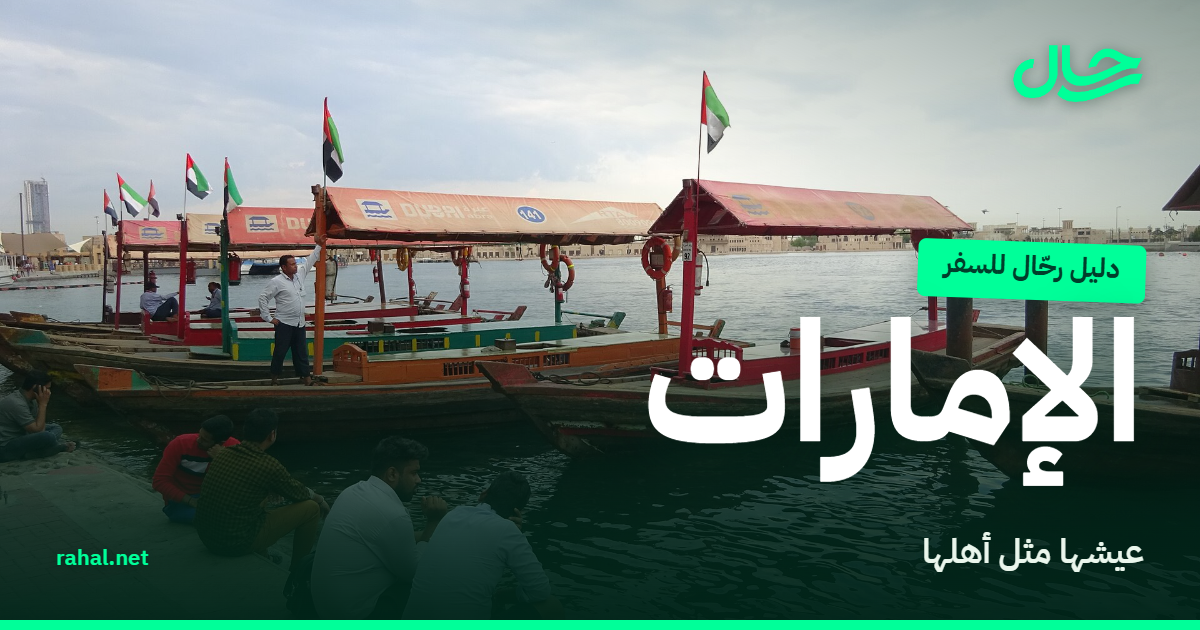
The best local secret: the abra. A wooden boat that crosses Dubai Creek between Deira and Bur Dubai for one dirham, the same route as a hundred years ago, right in the middle of a city of the future. The cheapest, most charming ride in the country.
Between emirates, buses are excellent and cheap: Dubai to Abu Dhabi is two hours for under 30 dirhams.
What do they eat… and when?
The undisputed king of drinks: karak tea. Tea with milk and cardamom, in a small cup, for one to two dirhams, from neighborhood cafeterias where every nationality in the country gathers. An evening karak sit-down at the local cafeteria is a genuine Emirati ritual shared by citizen and expat alike.
Authentic Emirati food is found in homes and heritage restaurants: machboos (a cousin of kabsa), harees during Ramadan, and luqaimat with date syrup as the national sweet. But the actual daily food of Dubai residents is a map of the world: cheap Indian and Pakistani restaurants in Deira and Karama, Lebanese and Syrian shawarma on every street, and excellent Iraqi restaurants serving masgouf and timman bagella just like home.
Meal times are flexible since the city runs 24 hours, but the weekend is Saturday and Sunday (note: not Friday and Saturday), with Friday a half government workday around prayer time.
And a myth worth busting: food in Dubai isn't all expensive. Skip the tourist restaurants, step into an old-neighborhood cafeteria, and you'll eat a full meal for under 20 dirhams.
The unwritten rules
- The law here is actually enforced. This is the most important rule. Littering: a fine. Crossing the street outside a designated crossing: a fine. Holding your phone while driving: a fine and points deducted. Don't test your luck — the system runs on cameras, not mood.
- Photographing people without permission is a real legal issue, especially photographing individuals, women, and families. Photograph landmarks freely, and leave people be.
- Speaking negatively about the state or its leadership is a legal red line, and even social media posts are prosecuted. Stay neutral as a guest.
- Dress is relatively free but within the bounds of public decency: malls post signs asking for modest dress, while beaches and pools are business as usual. Sharjah is noticeably more conservative than Dubai.
- Ramadan deserves respect in public spaces, even though restaurants now open during the day for visitors, eating or drinking openly on the street isn't appropriate.
- Tipping isn't mandatory but is customary: 10% at restaurants if service isn't included, and rounding up the fare for taxis.
Where do locals live?
House-hunting runs through two apps: Dubizzle and Property Finder. The strangest rental system you'll hear about: annual rent is paid via post-dated cheques — one cheque (the cheapest rate) or split into 2 to 4 cheques, and every lease must be officially registered through the Ejari system. Newcomers without a local bank account usually start with monthly furnished or shared housing until their paperwork is sorted.
The map is clear: Marina, Downtown, and JBR for high earners and tourists; Karama, Bur Dubai, and Deira for the middle class — the neighborhoods with old Dubai's real soul; and Sharjah for families wanting more space at half the price, in exchange for a longer commute. Iraqis are spread across all these areas, with a notable concentration in family-oriented neighborhoods.
🎵 Hear the country before you land
For the Iraqi Traveler 🇮🇶
Visa (verified: June 2026): The UAE requires a prior visa for Iraqi passport holders, but the process is electronic and relatively fast: applications go online through authorized channels, most commonly the airlines (Emirates, flydubai, Etihad, Air Arabia) when you book with them, or approved hotels and travel agencies, with tourist visas issued for 30 or 60 days. Prepare a passport valid for six months, a photo, and your bookings, and the response usually comes within days.
Flights: Dense direct flights from Baghdad, Najaf, Basra, and Erbil to Dubai, Sharjah, and Abu Dhabi, with a flight time of just over two hours. The Iraq-UAE route is one of the busiest in the region, so prices are competitive, and booking early gets good deals.
Money: A country of cards and digital payment through and through: your Iraqi international card works everywhere, from the metro to the grocery store. Keep a bit of dirham cash for cafeterias, the abra, and the fish market. ATMs are on every corner if needed.
Internet: Local SIMs are pricey for visitors. Cheaper option: activate the free eSIM from Rahal that comes with any confirmed international booking (1GB for 3 days): request it on WhatsApp at least 5 days before your trip, and unlock your phone at Dubai airport with data already working.
Food: Halal is the standard everywhere, and Iraqi restaurants in Dubai and Sharjah are among the best examples of the community's food in the world, so don't worry about your stomach or your craving for home cooking.
Tip worth remembering: Dubai is a city of seasons. From November to March the weather is golden and everything's open, while from June to September the heat keeps you indoors in the AC, and hotel prices collapse by half. If your budget is tight and you can handle the heat, a summer trip to Dubai is a genuine deal: five-star hotels at three-star prices.
The Honest Take
What's tough about the UAE: expensive rent and housing that eats salaries, a long, punishing summer, and a sense that "everything is temporary" since the whole country runs on residencies tied to your job. What's underrated? Old Dubai: the Creek, the abra, and Deira's markets (the Gold Souk and Spice Souk) that hold the city's original soul, and the northern emirates like Ras Al Khaimah with its mountains and Fujairah's calm Gulf of Oman coast. If you want to compare with the big Gulf neighbor, read our guide to Saudi Arabia from the same series.
The Bottom Line: The UAE suits families, traders, and ambitious young people looking for a nearby trip where everything is ready and organized. If you respect the laws and avoid the tourist-price trap, Dubai gives you a mini version of the whole world in a single trip.
FAQ
What's daily life like in the UAE?
A fast, organized, work-heavy pace: a long workday, metro and traffic, then an evening life of malls, cafeterias, and corniches. The weekend is Saturday and Sunday (not Friday and Saturday), and summer shifts all of life indoors to air-conditioned spaces. The city is a mix of 200 nationalities living side by side under a strict, clear system.
Is the UAE expensive to live in?
Rent is the real expense: a one-bedroom in central Dubai runs around 8,400 dirhams a month, against an average salary of 14,000 dirhams (Numbeo figures, 2026), so housing eats a third of income or more. On the other hand, gas, transport, and casual food at cafeterias and in the old neighborhoods are surprisingly cheap.
What are the important customs to know in the UAE?
The law is actually enforced through cameras and fines: no littering, no jaywalking outside designated crossings, no holding your phone while driving. Photographing people without permission is a real legal issue, and speaking about the state is a red line even on social media. The weekend is Saturday and Sunday — factor that into your plans.
What do people eat in the UAE every day?
Karak tea for two dirhams is the country's real national drink, surrounded by food from every continent: cheap Indian and Pakistani restaurants in Deira and Karama, shawarma on every street, and excellent Iraqi restaurants. Authentic Emirati food (machboos, harees, luqaimat) is found in heritage restaurants and homes.
Does the UAE need a visa for Iraqis?
Yes, a prior visa, but the process is electronic and relatively fast (verified: June 2026): apply online through airlines when you book with them, or through approved hotels and travel agencies, for 30 or 60 days. Prepare a passport valid for six months and your bookings, with a response usually within days.
What do tourists usually miss in Dubai?
Old Dubai. Everyone pictures themselves by the Burj Khalifa and misses Dubai Creek: the one-dirham wooden abra, the Gold and Spice Souks in Deira, and the historic Al Fahidi neighborhood. Beyond Dubai, Ras Al Khaimah's mountains and Fujairah's calm beaches on the Gulf of Oman break the "UAE is just malls" image.
Sources: Wikivoyage (CC BY-SA), CIA World Factbook (public domain), cost figures from Numbeo and multiple sources. Last updated: June 2026.