
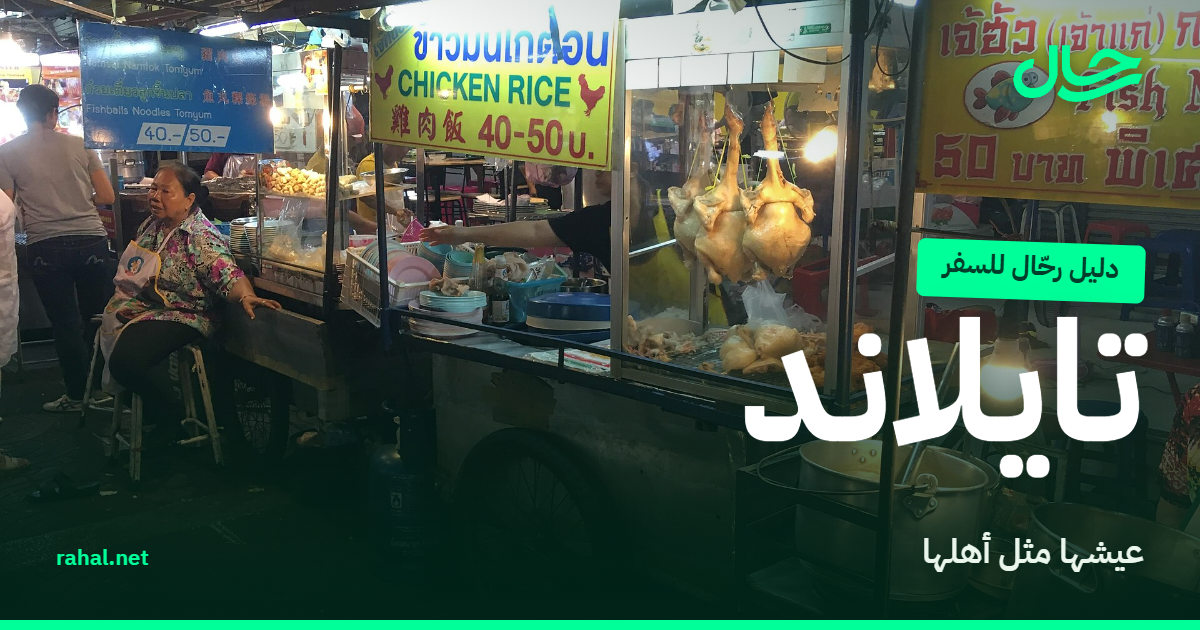
Thailand Like a Local: The Real Bangkok Beyond the Beaches
Most people picture Thailand as islands, beaches, and honeymoon resorts. But if you want to live Thailand the way its people do, the story starts somewhere else entirely: at a street cart on a Bangkok sidewalk at 7am, the smell of curry rice filling the street, office workers in ironed shirts eating breakfast standing up before hopping on the Skytrain. Thais really are a smiling people, but behind the smile is a full system of respect you need to understand: for the King, for the temple, for the head, and for calm. Whoever understands it, the whole country opens up to them; whoever ignores it stays a tourist outside the picture. In this guide from the Travel Like a Local series, we'll walk you through the real Thailand: the food, the prices, the way around, and everything an Iraqi traveler needs, from the visa to halal food.
Who lives there?
Thailand is home to over 70 million people, and Greater Bangkok alone holds nearly 11 million of them — a giant city that practically never sleeps. The dominant religion is Buddhism, and you see its mark on every corner: golden temples, monks in orange robes walking in the morning, and small spirit houses standing in front of every building, even malls.
Worth knowing as a Muslim traveler: Thailand has millions of Muslims, most of them in the south and in well-known neighborhoods of Bangkok, so mosques and halal food have deep roots there rather than being something new.
Thais are a naturally calm people who dislike loud voices and confrontation, and hold the concept of "saving face" sacred. English is limited outside tourist areas, but sign language, smiles, and Google Translate get things done, and Thais are patient with guests in a way that will humble you.
How much does daily life cost?
According to Numbeo (mid-2026) for Bangkok:
- Average net monthly salary: around 23,000 baht (roughly $650).
- Monthly living costs for one person, excluding rent: around 22,000 baht.
- A meal from a street cart: 60 to 80 baht (about $2), and an air-conditioned local restaurant: around 100 to 130 baht.
- Renting a studio or one-bedroom: from 12,000 baht in ordinary areas near the metro, rising to 20,000 baht and up in central Sukhumvit.
Bangkok is one of those rare cities where you can live at two different levels on the same street: lunch for two dollars from a cart, or fifty dollars at a rooftop restaurant. An Iraqi traveler with a mid-range budget lives very comfortably there.
What's cheap and delightful: the food (some of the cheapest and best street food in the world), transport, Thai massage, and tropical fruit. What's relatively expensive: hotels during peak season, and anything imported from the West.
How do people get around?
In Bangkok, city residents live on two train lines: the elevated BTS and the underground MRT, clean, air-conditioned, and punctual, with fares running roughly 17 to 60 baht depending on distance. These two save you from Bangkok traffic, considered among the worst in the world.
For everything else, the go-to app is Grab: taxis, food delivery, everything, at clear prices with no haggling. Regular pink taxis exist too — ask the driver to run the meter ("meter"), and if they refuse, get out and find another one.
As for tuk-tuks, be clear-eyed about them: a fun tourist experience once, but pricier than a taxi. Locals use motorcycle taxis (the orange vests) for short trips through the alleys, and they're the fastest way through traffic.
Between cities, domestic flights are very cheap (Bangkok to Phuket or Chiang Mai can cost about the same as a bus ticket if booked early), and night trains are a classic, enjoyable experience for travelers with time to spare.
What do they eat… and when?
Thais eat all day long, and the street is their open kitchen: breakfast from a cart (boiled chicken rice "khao man kai" or rice porridge), a quick lunch, and dinner as the social meal. Food comes shared: dishes spread across the middle of the table for everyone to take from — much like our own table culture.
Dishes worth trying: pad thai (fried noodles), tom yum (hot and sour soup), green curry, and som tam (spicy papaya salad that hits hard). The heat rule: "phet nit noy" means a little spicy, and if you say "spicy" they'll take it as a challenge. Go in cautious — their spicy is not our spicy.
7-Eleven is a national institution: on every street, open 24 hours, where you eat, pay bills, and top up credit — and toasted cheese sandwiches there have their own well-known youth-culture ritual.
And a myth worth busting: street food isn't "risky for your stomach." Carts with a line of locals are often cleaner and fresher than a random restaurant, because the food sells out and gets cooked fresh every hour. Follow the queues and eat.
The unwritten rules
- The monarchy is above every conversation. Any negative remark about the King or royal family is a criminal offense punishable by years in prison, and it applies to foreigners too. No jokes, no posts, no comments. The royal anthem plays in cinemas before the film and everyone stands — stand with them.
- The head is sacred, the feet are the lowest thing. Don't touch anyone's head (even children's), don't point your foot at a person or object, and don't extend your feet toward a Buddha statue or the King's image.
- The wai is the country's greeting: palms pressed together in front of the chest with a slight bow. You're not expected to master it, but returning it with a smile and a polite nod opens hearts.
- Raising your voice is a losing move. Getting angry or shouting in Thailand costs you the situation instantly, no matter how right you are. Stay calm, smile, and negotiate gently — that's the country's language.
- Shoes come off before temples, homes, and many small shops. Look at the pile by the door and follow suit.
- Modest dress at temples is mandatory: shoulders covered and pants below the knee, for both men and women. Pack a scarf or light trousers in your bag.
Where do locals live?
Bangkok residents live "condo life": modern residential buildings with a pool, gym, and security — and this isn't a luxury for the wealthy, it's the normal setup for a young professional, since a studio condo starts around 12,000 baht near the train lines. House-hunting runs through sites like DDproperty and Hipflat, and leases are usually annual with a two-month deposit.
The golden rule in Bangkok: live near a BTS or MRT station, no matter what, because your whole life will be built around the train. Sukhumvit and Asok are central and pricier; On Nut and other end-of-line stations suit students and young professionals; and the Ramkhamhaeng area around Bangkok's Java Mosque and the Nana district are where you'll find Arab and Muslim neighborhoods with halal restaurants.
Tourists sleep on Khao San Road or Silom, while anyone who wants to live the city like a local takes a condo in On Nut and eats from the cart downstairs.
🎵 Hear the country before you land
For the Iraqi Traveler 🇮🇶
Visa (verified: June 2026): Thailand uses an eVisa system for Iraqi passport holders: apply online through the official Thai platform, upload your passport, photo, bookings, and proof of financial means, and pay the fee online, with a response within a few business days. Apply at least two weeks before your trip to be safe, and don't book non-refundable flights before it's issued.
Flights: There are no direct flights from Iraq to Bangkok; the usual route transits through Dubai, Doha, or Istanbul, with the full journey from Baghdad, Najaf, or Basra taking around 10 to 12 hours including the layover.
Money: International cards work in malls, hotels, and on Grab, but the world of the street, markets, and carts runs on cash in baht. Withdraw from ATMs (they charge a flat fee for foreign withdrawals, so withdraw larger amounts less often) or exchange your dollars at the green exchange counters found around the city, whose rates are noticeably better than the airport's.
Internet: Activate the free eSIM from Rahal that comes with any confirmed international booking (1GB for 3 days): request it on WhatsApp at least 5 days before your trip, and land in Bangkok with maps and Grab working from the first minute, then get a local tourist SIM if you're staying longer.
Halal food: Easier than you'd think. The Ramkhamhaeng neighborhood and the Nana area (the Arab market) are full of halal and Arab restaurants, major food chains have halal-certified branches, and in the south and the islands, halal food is the norm. Ask "halal?" and they'll understand, and halal shops display the sign in Arabic.
Tip worth remembering: Keep your food budget for the carts and local restaurants, and bump your hotel budget up a notch. The difference between a 3-star and a 4-star hotel in Bangkok can be as little as $15 a night, and the comfort doubles. Save on a plate, sleep better.
The Honest Take
What's tough about Thailand: the long distance and transit time from Iraq, brutal heat and humidity (April is the hottest month), and the rainy season from May to October that floods the streets for hours at a time. What's underrated? The country's north: Chiang Mai and Chiang Rai, mountains, temples, cool weather, and prices much lower than the islands — where Thais themselves go on their own vacations. If you're after an Asian destination that's closer to a Muslim traveler's heart and easier on the visa, read our guide to Malaysia from the same series.
The Bottom Line
Thailand suits honeymooners, families, young travelers, and anyone who wants the farthest trip at the best price. If you respect the country's calm rules and eat where the locals eat, Thailand gives you a vacation you'll talk about for years.
FAQ
What's daily life like in Thailand?
Street life through and through: food from carts all day, getting around by Skytrain and motorbike taxi, and evenings at night markets. The pace is calm and smiling despite Bangkok's traffic, and loud voices or confrontation are socially rejected. 7-Eleven is on every corner, a national institution for food, bill payments, and everything else.
Is Thailand expensive to live in?
One of the cheapest major destinations in the world: a street meal for 60 to 80 baht (about $2), a modern studio condo with a pool from 12,000 baht a month, and an average local salary around 23,000 baht (Numbeo figures, mid-2026). A visitor with a mid-range budget can live at a level unaffordable in most Western countries.
What are the important customs to know in Thailand?
The monarchy is above any discussion, and negative remarks about it are a criminal offense even for foreigners. The head isn't touched and feet aren't pointed at anyone, shoes come off at temples and homes, and dress at temples must be modest. Most important: calm — anger and shouting lose you any situation.
What do Thais eat every day?
Street food all day: chicken rice (khao man kai), pad thai, tom yum soup, and spicy som tam salad. Dishes are shared across the middle of the table, much like our own table culture, and spice levels vary, so start by asking for "a little spicy." Halal food is available in well-known neighborhoods and through official certification.
Do Iraqis need a visa for Thailand?
Yes, an eVisa applied for online through the official Thai platform before travel (verified: June 2026): valid passport, photo, bookings, and proof of funds, with a response within business days. Apply at least two weeks ahead and don't book non-refundable tickets before it's issued.
What do tourists usually miss in Thailand?
The country's north. Everyone goes to Bangkok and the islands, while Chiang Mai and Chiang Rai in the north offer green mountains, white and gold temples, authentic night markets, cool winter weather, and prices much lower than the islands. Thais themselves spend their own vacations there, which is the most honest recommendation there is.
Sources: Wikivoyage (CC BY-SA), CIA World Factbook (public domain), cost figures from Numbeo. Last updated: June 2026.