
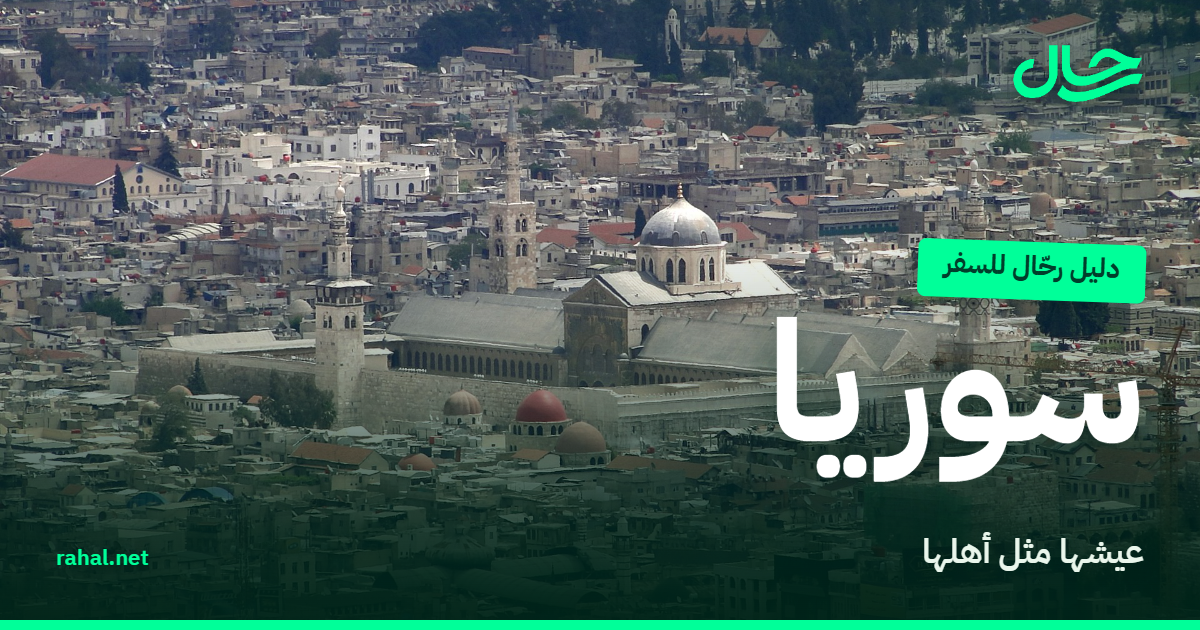
Syria Like a Local: The Real Travel Guide for Iraqis
For many Iraqis, Syria isn't a foreign country — it's "al-Sham": family, history, markets, restaurants, and memories. Damascus is one of the oldest continuously inhabited capitals in the world, and its markets like Al-Hamidiyah, its Damascene food, and its jasmine are part of the collective memory of the whole region. But we need to be honest from the very first line: Syria has been through years of war, and the security and services situation has changed significantly. Any trip today requires precise, current knowledge of the situation before taking any step. In this guide from the Travel Like a Local series, let's walk through the real Syria — the good and the difficult — with full honesty.
Who lives there?
Syria has around 23 million people (a number that has shifted significantly due to years of war, displacement, and refugee movement). The Syrian people are majority Arab, with Kurdish, Armenian, and other minorities, and majority Muslim (Sunni, Alawite, Druze, and Ismaili) alongside a very ancient Christian minority — one of the oldest Christian communities in the world.
The language is Arabic in the Damascene dialect, easily understood by any Iraqi (from TV dramas and cultural proximity), so there's essentially no language barrier. Syrians are known for their generosity, warmth, easygoing nature, and refined taste in food and hospitality — even after everything they've been through.
The Iraqi-Syrian relationship is old and deep: extended families, trade ties, and pilgrimages to Sayyida Zaynab near Damascus that Iraqis have made for generations.
How much does daily life cost?
Here honesty is essential: years of war and sanctions have devastated the economy, the Syrian pound has collapsed, prices are highly volatile, and there are service shortages (electricity, fuel) in some areas. Figures change quickly, so don't rely on a fixed number — treat everything here as a rough indicator only:
- The country is very cheap in dollar terms, but its people struggle because salaries in Syrian pounds barely cover basic needs.
- Local food and transport are cheap in dollar terms, while imported goods and fuel are expensive and scarce in some areas.
- Electricity comes for limited hours in many areas, with heavy reliance on generators and private subscriptions.
For a visitor carrying dollars, Syria is inexpensive — but the real cost isn't financial, it's in planning, caution, and logistics. This isn't a country you visit spontaneously without arrangements.
How do locals get around?
Within cities, shared taxis (servees) and microbuses are the cheapest way Syrians get around, along with metered taxis in Damascus. The situation varies by region, and some roads between cities are affected by the security situation and checkpoints.
Between cities, buses connect the main cities (Damascus, Aleppo, Homs, Latakia), but travel times and procedures change depending on conditions. The core advice: travel with trusted local knowledge, and never plan a route without asking locals about the current situation.
What do they eat… and when?
Damascene cuisine is one of the great cuisines of the Arab world, and Iraqis already know and love most of it. Fatteh in its many forms, Syrian shawarma (the reference point for shawarma everywhere), kibbeh in dozens of shapes, stuffed vegetables, and ful and hummus for breakfast. Damascus is also a city of sweets: baklava, maamoul, and Damascene ice cream (booza, famously at Bakdash in Souq Al-Hamidiyah).
Damascene table culture is generous and varied: many mezze dishes and long, unhurried sittings. Old Damascene cafés (like An-Nawfara) offer a hakawati storyteller, tea, and shisha in an atmosphere found nowhere else. Street food is rich and cheap.
A myth worth busting: despite everything, the spirit of Syrian hospitality and Damascene food hasn't broken — if a Syrian family hosts you, they'll honor you with everything they have.
The unwritten rules
- Safety awareness is the first rule. This isn't a typical tourist destination today. Move through known safe areas, with local guidance or an escort, and avoid any area of uncertainty. Your safety comes before any landmark.
- Damascene generosity is real and deep. If you're invited to a Syrian home, they'll host you beyond their means. Bring something sweet, and appreciate the invitation.
- Sensitivity to the situation matters. People have been through very difficult years and personal losses. Be kind and respectful, avoid opening political or security topics, and listen more than you speak.
- Be careful with photography: avoid photographing anything security- or military-related, or checkpoints — this matters a great deal for your safety.
- Modesty and respect for customs are appreciated, especially in conservative areas and religious shrines.
Where do locals live?
Accommodation varies drastically by region and its situation. For visitors, the usual stay in Damascus is at hotels in known safe areas, and most visiting for religious purposes (Sayyida Zaynab) stay in areas designated for that.
The smarter approach: don't book accommodation randomly. Arrange it through a trusted party or an organized group familiar with the situation on the ground, especially for shrine visits.
🎵 Hear the country before you arrive
Music is half of any trip. Here's a playlist to set your mood for Syria before you even land — play it while you pack:
For the Iraqi traveler 🇮🇶
Entry and current situation (verified: June 2026): Officially, entry between Iraq and Syria has historically been relatively straightforward for Iraqis (traditionally without a prior visa through certain crossings, with special arrangements for shrine visits). But here's the most important rule: the security, logistical, and border-procedure situation in Syria continues to change constantly after years of war, and crossings and roads open and close. Do not plan any trip to Syria based on old information. Check with the Iraqi Ministry of Foreign Affairs, official authorities, and a trusted travel agency specializing in Syria before taking any step, and confirm the exact status of your crossing, route, and destination area on the day of your trip.
Flights and roads: Damascus International Airport receives flights (varying with conditions), and the land route through known crossings between Iraq and Syria depends on the situation at the time of your travel. Confirm everything in advance.
Money: Syria runs on a fully cash-based economy. Bring cash in dollars (and exchange locally as needed), since international cards and global banking systems don't work due to sanctions. Plan all your finances in advance.
Internet: Local networks are inconsistent and weak in some areas. The free eSIM from Rahal that comes with any confirmed international booking (1GB for 3 days) may help depending on coverage: request it on WhatsApp at least 5 days before your trip.
Food and worship: Food is halal (a majority-Muslim country), Damascene cuisine is very close to our own taste, and the shrines and mosques are a historic religious destination for Iraqis.
Worth remembering: Your safety matters more than any landmark. Don't travel to Syria based on this guide or any general source alone — confirm the current security situation for your area and route with a trusted official source right before your travel date. Conditions change quickly, and what's accurate today may change tomorrow.
The honest take
The hard parts about Syria are clear and undeniable: the security and logistical situation after years of war, service shortages in some areas, and a cash-based economy under sanctions. This is a country that requires caution and planning, not a spontaneous destination. And what gets overlooked? Unmatched civilization, history, and hospitality: Old Damascus, the markets of Aleppo (as they recover), the ruins of Palmyra, and the Syrian coast. The Syria in our memory is a great country, and we hope for safety and recovery for its people so it can welcome its guests again as it once did. If you're drawn to a stable neighboring Arab destination with food that feels close to home, check out our guide on Lebanon from the same series.
Bottom line: Syria is dear to every Iraqi for its history and hospitality, but visiting it today is a decision that requires precise knowledge of the current security situation. Confirm with a trusted official source before any step, and put your safety above every other consideration.
FAQ
What's daily life like in Syria?Life has changed a great deal after years of war and varies drastically by region. In safe areas, Damascene markets, restaurants, and cafés carry an authentic Levantine spirit, alongside service shortages (limited electricity hours, reliance on generators). Generosity and the spirit of the people remain despite difficult circumstances, and Damascene food is still among the best in the region.
Is Syria expensive to live in?Very cheap for a visitor paying in dollars, but locals struggle since the Syrian pound has collapsed and salaries don't cover basic needs. Prices are highly volatile — don't rely on a fixed figure. The real cost isn't financial, it's in planning and caution, and fuel and imported goods are expensive and scarce in some areas (estimates as of mid-2026, subject to change).
What important customs should I know in Syria?Safety awareness is the first rule: move through known safe areas with local knowledge, and avoid photographing anything military or any checkpoints. Damascene generosity is deep and shouldn't be refused, and people have been through difficult times, so be kind, avoid political or security topics, and listen more than you speak.
What do Syrians eat every day?Damascene cuisine is one of the greats: fatteh, shawarma, kibbeh, and stuffed vegetables, with hummus and ful for breakfast, and Damascene sweets like baklava and booza ice cream. Mezze culture and long tables reflect genuine hospitality, and old Damascene cafés with their storytellers and shisha offer a one-of-a-kind atmosphere.
Does Syria require a visa for Iraqis?Officially, entry has historically been relatively straightforward for Iraqis (verified: June 2026), but the security, logistical, and border-procedure situation continues to change constantly after the war. Don't plan based on old information: check with the Iraqi Ministry of Foreign Affairs and a trusted specialized travel agency, and confirm the exact status of your crossing and destination area on the day of your trip.
What do tourists usually miss in Syria?Unmatched civilization and history: Old Damascus with the Umayyad Mosque and its markets, the markets of Aleppo, the ruins of Palmyra, and the Syrian coast. Syria has historically been one of the richest countries in the region for landmarks, and we hope for safety for its people so it can welcome visitors again as it once did.
Sources: Wikivoyage (CC BY-SA), CIA World Factbook (public domain). The security and logistical situation is subject to change — confirm with a trusted official source before traveling. Last updated: June 2026.