
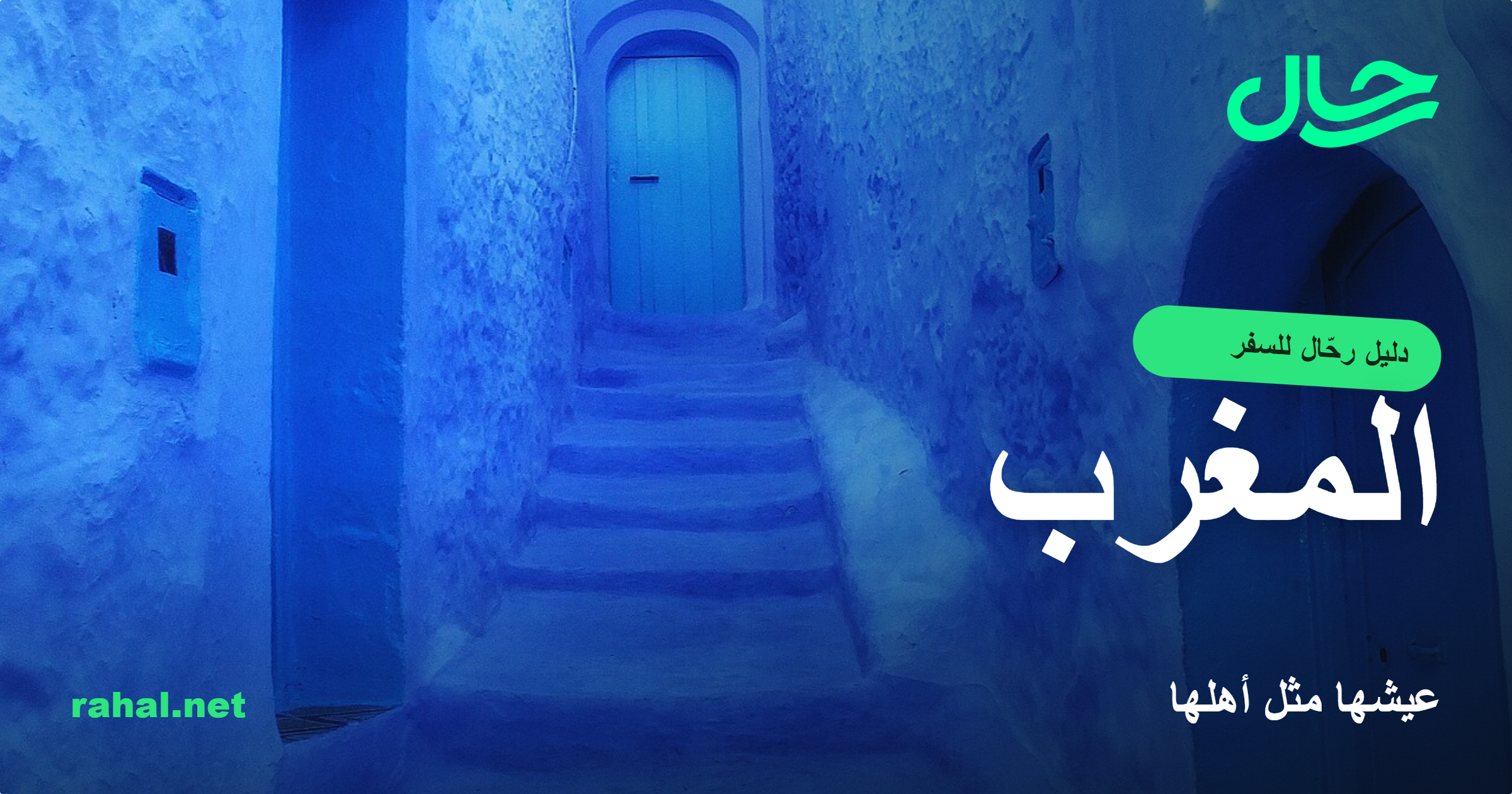
Morocco Like a Local: The Real Travel Guide for Iraqis
A tourist visits Morocco, takes a photo of the Marrakech gate, sips mint tea at a touristy café, and goes home thinking they understood the country. Real Moroccans buy their bread from the neighborhood oven every morning for 1.5 dirhams, drink mint tea five times a day with every guest, and know that the best market isn't the touristy Jemaa el-Fnaa — it's the weekly neighborhood souq that the same people return to every week. This article isn't about landmarks. It's about a way of life.
Who lives there?
Morocco has around 38 million people, with a median age of 30 — a relatively young society compared to Europe. Over 64% of the population lives in cities, and Casablanca alone has more than 3.7 million people. Moroccan Darija Arabic is the everyday language, but French has a strong presence in education, business, and administration (a legacy of French colonization), and Amazigh (Berber) is a second official language spoken by a large share of the population, especially in the mountains and rural areas.
Religion: Morocco is 99% Muslim, and Islam is a core part of national identity and daily rhythm. Here's a fact that surprises many: Morocco is a blend of Arab, Amazigh, Andalusian, and African identity, and this diversity is clearly visible in the food, music, and dialect — not just in theory.
The daily rhythm: Moroccans start their day early, the call to prayer naturally organizes time, and the extended family is central. Family lunch is sacred, especially on Fridays (traditional couscous). Evenings are when real life happens — streets and cafés come alive after sunset prayer and stay lively late into the night.
How much does daily life cost?
Casablanca residents earn an average of around $500 net per month, low by global standards but proportional to the local cost of living. A meal at a budget restaurant costs about $3 (roughly 30 dirhams), among the cheapest meal prices in North Africa.
Rent in Marrakech is noticeably lower than in Casablanca: a one-bedroom apartment in central Marrakech runs about £366 per month (roughly $460), while Casablanca's rent runs higher due to its economic nature. A monthly transit pass in Marrakech costs only about £20 (roughly $25).
Surprisingly cheap: vegetables and fruit at local markets (souqs), tea and coffee at local cafés, and shared taxi transport (the Moroccan "grand taxi" system). Relatively expensive: tourist hotels in the old medinas and restaurants in areas designed for tourists.
(Numbeo Marrakech 2026 figures: numbeo.com/cost-of-living/in/Marrakech)
How do locals get around?
Casablanca and Rabat residents use the tramway (a modern tram line in both cities), city buses, and small taxis ("petit taxi," very cheap for short distances within the city). Larger shared taxis ("grand taxi") are used for longer distances and between cities, operating on a shared-fare basis (each passenger pays their portion).
Between cities, the train (ONCF) is the best and most comfortable option, especially the Al Boraq high-speed train between Casablanca and Tangier. Buses (CTM and Supratours) form an extensive, cheap network connecting even small Moroccan towns.
What confuses outsiders: shared taxis (grand taxi) wait until they're full of passengers before departing — this is normal, not a scam. And in the old medinas, cars never enter at all; you walk or use a handcart to move luggage.
What do they eat, and when?
Moroccan breakfast is rich and unhurried: fresh oven bread, olive oil, honey, cheese, and mint tea. Lunch is the most important meal of the day, from 1 to 3 pm, and often a family affair at home. Dinner is lighter and starts from 8 pm, sometimes running as late as 9 or 10.
Dishes you must try: tajine (not a single dish — countless varieties depending on region, meat, and vegetables), Friday couscous (a sacred weekly tradition in every Moroccan household), and harira (a tomato-lentil soup, a staple during Ramadan and any cold weather). Mint tea isn't just a drink — it's a complete social ritual, served three times in a row, tasting slightly different each time.
A myth worth busting: Moroccan food is spicy and heavy. Wrong — most Moroccan food is mild in heat and packed with fresh vegetables and legumes. Spice (hot chili) is optional and added at the table if you want it.
Worth remembering: If you enter an old medina and lose your way, ask any small shop — don't follow anyone offering to guide you for money. It's unnecessary; the medinas are small and safe to wander freely.
The unwritten rules
Greetings in Morocco are warm and intimate: a handshake followed by touching the heart (a sign of respect), and among close friends, cheek kisses. Asking about someone's health and family is a core part of any greeting, even if you've just met them.
Everyday dress: Morocco is diverse — in big cities, dress is modern and open, while in rural areas and small towns it's more conservative. As a visitor, relatively modest dress (covering shoulders and knees) is met with greater respect, especially when visiting mosques or religious sites.
Home hospitality: being invited to a Moroccan home is a great honor. Accept the tea even if you just drank one — refusing Moroccan hospitality is considered offensive. Remove your shoes when entering the home, and expect a long meal with even longer conversation.
Off-limits topics: the Western Sahara issue is politically very sensitive — don't open a discussion about it. The monarchy is generally treated with respect. What they take pride in: hospitality, craftsmanship (zellige tilework, carpets), and a rich history.
You'll come across as rude if you: flatly refuse offered tea, negotiate harshly without respect (bargaining is part of the culture but has its limits of courtesy), or enter a mosque not designated for visitors.
Where do locals live?
Big-city residents live in modern neighborhoods outside the old medina: in Casablanca, areas like Maarif and California, and in Marrakech, areas like Gueliz and Hay Al Mohammadi. The old medina in Marrakech and Fez has increasingly become dominated by small hotels (riads) and tourist accommodation, with fewer original local residents over time.
For renting, they use Avito.ma (the most popular classifieds site in Morocco) and local real estate agents. Traditional riads (old houses with an interior courtyard) are available for daily or monthly rental — a unique living experience, though pricier than a regular apartment.
As a visitor, staying in a riad in the old medina is an experience worth having at least once, but for longer, cheaper stays, apartments in modern neighborhoods (Gueliz in Marrakech, Maarif in Casablanca) are better value and closer to how locals actually live.
🎵 Hear Morocco before you arrive
Everyday Moroccan music is a unique blend: Chaabi (celebratory music with traditional instruments, heard at every wedding and party), Gnawa (spiritual music with sub-Saharan African roots, originating from freed slaves, now recognized as world heritage through the Essaouira festival), and Raï and Moroccan rap among young people. Every region in Morocco has its own musical style.
For the Iraqi traveler 🇮🇶
Visa: The visa situation between Morocco and Iraq is special and not generally open to everyone. According to the Iraqi Ministry of Foreign Affairs, Morocco's e-visa system is currently available only to specific categories of Iraqis — most notably Iraqis residing in EU countries, the United States, Canada, the UK, Japan, Switzerland, New Zealand, or Norway, provided they hold a valid residency there along with a regular, valid Iraqi passport. If you don't fall into these categories, direct contact with the Moroccan Consulate in Baghdad is necessary to find out the currently available options. This is one of the fastest-changing details, so confirm via the official website www.acces-maroc.ma or the Moroccan consulate before any booking. (Verified: June 2026)
Flights: There are currently no direct flights from Iraq to Morocco. Best options: Emirates or Etihad Airways via the UAE, or Turkish Airlines via Istanbul, followed by a connecting flight to Casablanca or Marrakech.
Cash and cards: Morocco is heavily cash-based for markets, small shops, and the old medinas, especially for bargaining (always in cash). Cards are accepted at hotels, larger restaurants, and malls. The Moroccan dirham is a relatively closed currency, exchanged only within Morocco — keep your exchange receipt if you want to convert leftover cash back on your way out.
Halal food: Morocco is 99% Muslim, so essentially all food is automatically halal, aside from a few known exceptions (alcohol is available only at certain hotels and restaurants). This is one of the easiest aspects of visiting Morocco for a Muslim Iraqi traveler.
Community: The Iraqi community in Morocco is very small, but Morocco is a hospitable Arab country, and Arabic (in its distinctive Moroccan dialect) opens doors quickly. Facebook groups like "Iraqis in Morocco" are limited but exist for practical information.
Related article: France Like a Local
The honest take
Morocco is an exceptional destination for Iraqi travelers due to its cultural, linguistic, and religious closeness — most of the challenges you'd face in Europe (halal food, prayer, language) simply don't come up here. What's genuinely hard: the complex and limited visa situation mentioned above — you need to confirm it precisely before any travel plan, since this isn't something resolved on arrival at the airport.
What gets overlooked: Chefchaouen, the blue city in the north, and the Moroccan Rif region. Tourists focus on Marrakech, Fez, and Casablanca, but Chefchaouen with its blue hues and mountain calm is a completely different, far less crowded experience. Who it suits: the Iraqi traveler who wants cultural comfort without losing the feeling of travel and discovery. Not for someone expecting an easy, visa-free trip without advance planning.
Bottom line: Morocco gives you the warmth of the Arab world and the exotic feel of North Africa at the same time — but plan your visa carefully before anything else.
FAQ
Do Iraqis need a visa for Morocco?Yes, but the situation is special and limited. Morocco's e-visa system is currently available only to specific categories of Iraqis, most notably those residing in countries like the EU, the US, Canada, and the UK with valid residency. If you don't fall into these categories, contact the Moroccan Consulate in Baghdad directly to learn about currently available options before any booking.
How much does a trip to Morocco cost for an Iraqi traveler?Morocco is one of the cheapest destinations for Iraqi travelers. A budget traveler needs $25–35 daily (budget hostel or riad, local food, shared transport). A mid-range traveler needs $50–80 daily including a good riad and restaurants. Flight tickets range from $400–700 round-trip via a connecting hub.
Is all the food in Morocco halal?Yes, Morocco is 99% Muslim and nearly all food is automatically halal, making it one of the easiest destinations for a Muslim traveler with no concerns about food.
Is Arabic enough to get by in Morocco?Moroccan Darija differs significantly from Modern Standard Arabic or Iraqi dialect, but most Moroccans understand and can speak Standard Arabic if you speak slowly. French is very widespread in cities, education, and administration, and English is more limited outside tourist areas.
What's the best time to visit Morocco from Iraq?Two ideal windows: March and April (ideal weather, no intense heat, spring blossoms in the Atlas Mountains), and October and November (after summer heat, mild weather). Avoid July and August in inland cities like Marrakech, where temperatures exceed 40°C, though the coast (Essaouira, Agadir) stays mild in summer.
Do I need a car in Morocco?Between major cities, the train (ONCF) and buses (CTM) are a better, cheaper, and less stressful option than driving. A car is useful if you want to explore the Atlas Mountains, the desert, or small villages not served by public transport, but avoid driving inside the old medinas — cars are banned there entirely.
Sources: Wikivoyage (CC BY-SA), CIA World Factbook (public domain), cost figures from Numbeo Marrakech, the Iraqi Ministry of Foreign Affairs and the Moroccan Consulate for visa information. Last updated: June 2026.