
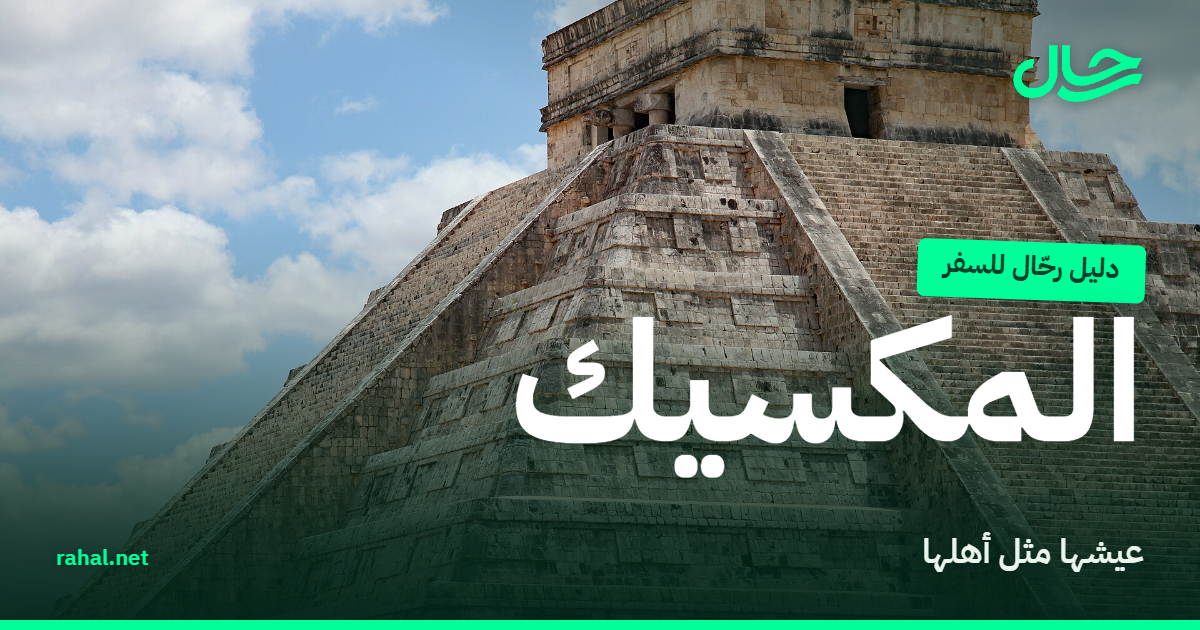
Mexico Like a Local: The Real Travel Guide for Iraqis
Mexico is a country that surprises everyone who visits: ancient civilizations (Maya and Aztec) with pyramids that rival Egypt's, turquoise Caribbean beaches (Cancún), one of the richest cuisines in the world, and a warm people full of life, color, and music. But if you want to experience Mexico like a local, you have to look past the resort image: real Mexican life revolves around family, food, and celebration — tacos are a sacred daily meal, and mariachi music is part of every occasion. And the most important practical point for Iraqis: Mexico is closer than you'd think, because a valid US visa opens the door without a separate Mexican visa. In this guide from the Travel Like a Local series, let's walk through the real Mexico together.
Who lives there?
Mexico has around 130 million people, and Greater Mexico City is one of the largest cities in the world (over 21 million). Mexicans are a mix of Indigenous peoples (Maya, Aztec, and others) and Spanish descent, with a proud, rooted identity. The overwhelming majority is Catholic (blended with older local traditions), and there's a very small Muslim community in the major cities.
The language is Spanish, and English is limited mostly to tourist areas (Cancún and near the US border), so learning a few Spanish words helps a lot. Arabic is essentially nonexistent.
Mexicans are known for warmth, emotional openness, generosity, and a love of celebration — a people full of life, color, music, and laughter, with family at the center of everything, and welcoming toward guests. Their spirit is close to the warmth of Mediterranean peoples.
How much does daily life cost?
Mexico is reasonably priced and much cheaper than the US or Europe. The currency is the Mexican peso. According to Numbeo (mid-2026):
A one-bedroom apartment in central Mexico City: roughly $600–900/month, cheaper outside the center and in smaller cities.
A meal at a casual restaurant: $5–8, and street tacos for a dollar or less.
- Public transport is very cheap (Mexico City metro costs cents).
- Comfortable living for one person in Mexico City: roughly $1,200–1,600/month including rent.
For comparison: Mexico has become a magnet for remote workers and Americans because living is comfortable, relatively cheap, and high quality of life. Cancún and tourist zones are pricier, while inland cities are much cheaper. A mid-budget Iraqi traveler can live comfortably.
Cheap: street food (tacos), transport, fruit, and non-touristy areas. Relatively expensive: Cancún/Riviera Maya resorts and imported goods.
How do locals get around?
Mexico City has a massive, very cheap metro (one of the cheapest in the world), plus the "Metrobús" (rapid bus) and an extensive transit network — the backbone of how millions get around, though crowded at rush hour. For taxis, Uber and DiDi are widespread, cheap, and safer than street taxis (recommended for visitors).
Between cities, Mexican buses are excellent and comfortable (luxury classes) and cheap — the main way Mexicans travel long distances — and there's affordable domestic flying too. Distances are large (Mexico is a vast country): Mexico City to Cancún by air takes about two hours, so flying suits longer routes better.
What surprises visitors: the sheer size and traffic of Mexico City, and the safety awareness required (avoiding certain areas, using Uber instead of street taxis, not showing off valuables).
What do they eat… and when?
Mexican cuisine is one of the richest in the world (recognized as world heritage), and far from American "Tex-Mex." The star is the taco: a corn tortilla filled with meat or chicken, topped with salsa, onion, cilantro, and lime, sold from street stalls everywhere — a sacred daily meal. Also try tamales, enchiladas, guacamole, and mole (a complex sauce with chocolate and chili).
Mexican street food is an experience in itself (the stalls crowded with locals are the tastiest and safest), along with grilled corn and fruit with chili. Mexicans eat tacos at any time of day. Dinner is at a moderate hour, and celebrations — with food at their center — are a core part of the culture.
A myth worth busting: real Mexican food isn't what you know from American restaurants (nachos and giant burritos); authentic Mexican food is lighter, fresher, and more complex in flavor, and varies a lot by region. Note for Muslim travelers: pork is very common in Mexican cuisine, so always ask about a dish's ingredients.
The unwritten rules
- Warmth and politeness matter. Mexicans are friendly and courteous, and a warm greeting and smile open doors. Rudeness and impatience aren't well received.
- Safety awareness matters. Mexico is safe in tourist areas and good neighborhoods, but some areas should be avoided. Use Uber instead of street taxis at night, don't flash money or jewelry, and ask locals about safe areas.
- Tipping (propina): 10–15% at restaurants is expected, and appropriate for other services too.
- Family and celebration are sacred. If you're invited to a Mexican home, the hospitality is genuine, full of food and music.
- Dress is practical, tourist areas are relaxed, but churches require modest dress.
- Learn a few Spanish words. "Hola, Gracias, Por favor." The effort delights people and makes everything easier since English is limited.
Where do locals live?
Housing searches happen on sites like Inmuebles24 and Vivanuncios and various apartment platforms. Mexico City has upscale, safe, modern neighborhoods that have become magnets for expats and remote workers, especially Roma, Condesa, and Polanco, with their cafés, parks, and safety. Visitors typically search short-term rental platforms.
For visitors, stay in Roma or Condesa in Mexico City (safe, beautiful, close to everything and the sights), or in resorts in Cancún/Riviera Maya if the beach is your goal. Avoid staying randomly in areas you don't know.
🎵 Hear the country before you arrive
Music is half of any trip. Here's a playlist to set your mood for Mexico before you even land — play it while you pack:
For the Iraqi traveler 🇮🇶
Visa (verified: June 2026): This is the most important section and holds the key to the trip. Officially, Iraqi passport holders need a visa for Mexico. But here's the golden rule that changes everything: if you hold a valid US visa (or a visa/residency from Canada, the UK, Schengen, or Japan), you can enter Mexico without a separate visa for up to 180 days. In practice, this means the realistic path for most Iraqis to Mexico is through a US visa they already hold. If you don't hold a visa from these countries, you'll need to apply for a Mexican visa in advance through the consulate. Confirm exemption details on the Mexican immigration authority's (INM) website or with the consulate before booking, as rules change.
Flights: There are no direct flights from Iraq to Mexico (the distance is huge), and the usual transit is through Europe (Istanbul, Frankfurt, Madrid) or the US (if your US visa allows transit), with total travel time of 16–22 hours including transit.
Money: International cards work in malls, hotels, restaurants, and tourist areas, but the world of street stalls, tacos, and markets runs on cash in pesos. Withdraw from ATMs (attached to known banks for safety) or exchange dollars at official exchange offices. Keep small bills on hand for stalls and tips.
Internet: Activate the free eSIM from Rahal that comes with any confirmed international booking (1GB for 3 days): request it on WhatsApp at least 5 days before your trip, so you land already connected, then get a local SIM if you're staying longer.
Halal food: Mexico is a Catholic country with a very small Muslim community, so halal food is rare outside a few Arab restaurants in Mexico City. Note: pork is very common in Mexican cuisine. Easiest options: vegetarian dishes (guacamole, beans, vegetables), fish and chicken (ask about preparation), and Arab restaurants in major cities. Always ask about ingredients.
Worth remembering: If you hold a valid US visa, Mexico is now within reach without a new visa application — a golden opportunity to combine a US and Mexico trip in one journey. Have Rahal's team on WhatsApp help you plan the route and best transit for your visa situation.
The honest take
The hard parts about Mexico: the huge distance and long journey from Iraq, the visa issue (unless you have a US visa, which solves everything), the safety awareness needed in certain areas, and the scarcity of halal food. And what gets overlooked? Everything outside Cancún: the culturally stunning Mexico City, the Teotihuacán and Maya pyramids (Chichén Itzá), authentic cities like Oaxaca and San Cristóbal, and the colorful "Pueblos Mágicos" (Magic Towns). If you're also drawn to a neighboring North American destination (and it's the key to Mexico's visa), check out our guide on the USA from the same series.
Bottom line: Mexico suits the adventurer, culture lover, food lover, and anyone with a US visa ready to use. If you can handle the long journey and sort out the visa, Mexico offers civilization, beaches, food, and colorful life like nowhere else.
FAQ
What's daily life like in Mexico?Warm life full of color and music: tacos are a sacred daily meal, family and celebration are central to the culture, and mariachi is part of every occasion. Mexicans are friendly, generous, and cheerful, with a spirit close to Mediterranean warmth. Mexico City is massive and vibrant, and daily life requires some safety awareness in certain areas.
Is Mexico expensive to live in?Reasonable and much cheaper than the US or Europe: a room in central Mexico City costs $600–900/month, a casual meal $5–8, a taco about a dollar, and comfortable living for one person around $1,200–1,600/month (Numbeo, mid-2026). It's become a magnet for remote workers due to its affordability and quality of life; Cancún is pricier than inland areas.
What important customs should I know in Mexico?Warmth and politeness matter (rudeness and impatience aren't well received), and safety awareness is important (use Uber instead of street taxis, don't flash valuables). Tipping is 10–15% at restaurants, family and celebration are sacred, and learning a few Spanish words makes everything easier since English is limited.
What do Mexicans eat every day?Tacos (corn tortilla filled with meat and salsa) are a sacred daily meal from street stalls, along with tamales, enchiladas, guacamole, and mole. Mexican cuisine is a world heritage and far from the American version. Note for Muslims: pork is very common, so always ask about ingredients.
Does Mexico require a visa for Iraqis?Officially yes, but if you hold a valid US visa (or visa/residency from Canada, UK, Schengen, or Japan), you can enter without a separate visa for up to 180 days (verified: June 2026). The realistic path for most Iraqis is through an existing US visa. Otherwise, apply for a Mexican visa in advance through the consulate. Confirm exemption conditions on the INM website before booking.
What do tourists usually miss in Mexico?Everything outside Cancún. Cultural Mexico City with its museums and neighborhoods, the Teotihuacán and Maya pyramids (Chichén Itzá) rivaling Egypt's, authentic cities like Oaxaca and San Cristóbal with their food and character, and the colorful "Pueblos Mágicos." Most visitors stick to Cancún's beaches and miss one of the world's deepest cultures.
Sources: Wikivoyage (CC BY-SA), CIA World Factbook (public domain), cost figures from Numbeo. Last updated: June 2026.