
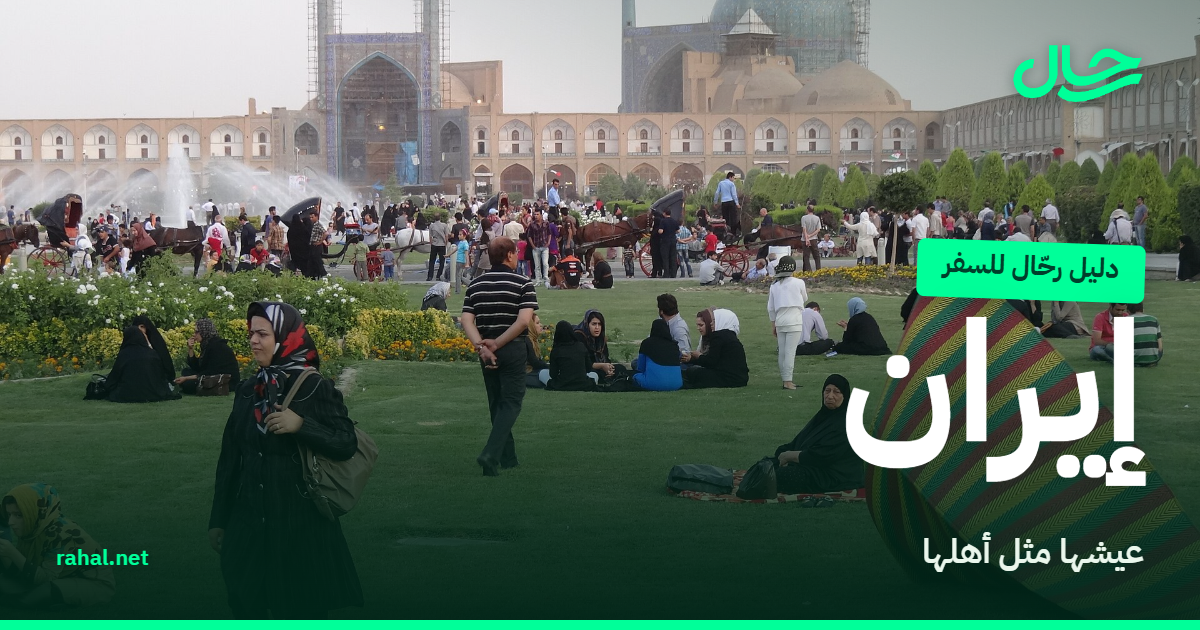
Iran Like a Local: The Real Country Beyond the Pilgrimage Route
Most Iraqis know Iran through pilgrimage: Mashhad and Qom, the bus and the group, and the trip back. But if you want to live Iran the way its people do, you'll discover a whole other country behind the pilgrimage route: cold mountain cities, cafés full of young people, public parks where families have dinner until midnight, and a people among the most generous with guests in the region. There's a paradox worth understanding before you go: Iran is one of the cheapest countries in the world for a visitor carrying dollars, and at the same time one of the hardest for its own people, who earn in local currency. In this guide from the Travel Like a Local series, we'll walk you through real life there — from taarof to the toman, from the Iranian table to the Snapp app.
Who lives there?
Iran has around 90 million people, most of them young and educated, with a very high urban population: Greater Tehran alone is home to 15 million. Persian is the official language, but the country is a genuine mosaic: Azeri in Tabriz, Kurdish in the west, Arabic in Ahvaz and the southern provinces — meaning in entire regions you can communicate directly in Arabic.
What surprises visitors who arrive with preconceptions: Iranian society in the big cities is far more open than the image suggests. Universities, cafés, and restaurants are full of young people, and cultural life (cinema, theater, exhibitions) is among the most active in the region. At the same time, religious cities like Qom and Mashhad have a completely different, more conservative rhythm. Iran isn't one color, and that's the first thing anyone who lives it like a local learns.
How much does daily life cost?
Here we have to be honest about two different stories: the visitor's story and the resident's story. According to Numbeo (mid-2026):
- Monthly living costs for one person in Iran, excluding rent: around $307.
- Renting an apartment in central Tehran: around $250 to $350 a month, noticeably cheaper in secondary cities.
- A meal at a casual local restaurant: roughly $3 to $5.
- A metro ride in Tehran: practically cents, among the cheapest transit in the world.
But against these numbers, a local teacher's or employee's salary in local currency amounts to roughly $200 to $300 a month. So the visitor paying in dollars lives very comfortably, while the Iranian family counts every rial. This gap is the key to understanding everything about Iran today.
And the currency situation is worth memorizing before you arrive: the official currency is the rial, but everyone talks in toman, and one toman equals 10 rials. So if someone tells you "fifty thousand," ask: toman or rial? You'll be confused the first couple of days, and that's normal — even Iranians joke about it.
How do people get around?
Within cities, the go-to app is Snapp, Iran's version of Uber, unbelievably cheap and available in every major city. Alongside it, Tapsi is a competitor. Tehran's metro is a huge, modern, clean network, with cars reserved for women at the front and back of each train.
Between cities, Iranians use VIP buses (comfortable and cheap) and night trains, and domestic flights are affordable but book up fast during pilgrimage season. Distances in Iran are large: Tehran to Mashhad is 900 kilometers, so don't treat it as a short hop.
What confuses visitors most: Tehran's traffic and driving style. Crossing the street there is a skill in itself — the tried-and-true advice is: cross next to an Iranian and move with them, step by step.
What do they eat… and when?
The Iranian table is a first cousin of the Iraqi one, but with its own personality. Their main meal is lunch, around 1 to 2pm, and dinner comes late, 9pm or after. Rice is the backbone: saffron Iranian rice with the crispy "tahdig" crust that families compete over at home.
The dish that defines the country is chelo kabab: koobideh kabab over a bed of rice with butter and grilled tomato. Also try dizi (abgoosht), similar to our tashreeb, served in a stone pot with its own full eating ritual: you drink the broth first, then mash the rest. And bread is its own love story: sangak and barbari come out hot from tandoor ovens every morning, and the line for hot bread is a daily sight.
Street food is lighter than ours: falafel sandwiches in the south, lablabi (chickpea snack), and grilled corn in the parks. Tea is present in every home, office, and shop, always with something sweet next to the glass.
And a myth worth busting: Iranian food isn't all kabab. Home cooking is full of stews (khoresht) that never make it to tourist restaurants: fesenjan with pomegranate and walnuts, ghormeh sabzi with herbs — and you only really taste these if you're invited to a home. And the chances of being invited in Iran are very high.
The unwritten rules
- Taarof. This is the single most important word to learn. An Iranian will refuse money the first time ("ghabel nadareh," meaning "it's not worth anything"), and a taxi driver might tell you "keep it." Don't believe the first refusal: it's a courtesy called taarof, and you're expected to offer again two or three times before they accept. The same goes in reverse: if something is offered to you, the first refusal isn't final either.
- Shoes come off outside the home, no discussion. Iranian homes are floored with rugs and carpets, and sitting on the floor is completely normal.
- Dress has the force of law. A headscarf for women in public is legally required. Enforcement has loosened in big-city streets in recent years, but at shrines and official institutions the rule is strict and firmly enforced. For men: shorts in the street aren't acceptable.
- Politics is a living-room topic, not a street one. Iranians discuss politics freely among themselves, but don't be the one who brings it up in public.
- An invitation is serious and isn't refused. If an Iranian says "come have lunch with us" and repeats the invitation after the taarof exchange, go. Bring sweets or fruit, never empty-handed.
- The weekend is different: the official days off are Thursday and Friday, and shops close Friday morning and reopen in the afternoon.
Where do locals live?
House-hunting in Iran runs through one app: Divar, the marketplace for everything in Iran, from apartments to cars. Their rental system is unusual to outsiders: the rahn system, where you pay a large deposit upfront (which can reach thousands of dollars), in exchange for which the monthly rent drops or disappears entirely, and the full deposit is returned to you at the end of the lease.
In Tehran, the north (Tajrish, Niavaran) is for the wealthy, cooler and cleaner, while the center and south are for ordinary people and much cheaper. Iraqi visitors to Mashhad will find whole neighborhoods around the shrine used to Arab visitors, but if you want to see the real Mashhad, walk a couple of streets away from the hotel district.
🎵 Hear the country before you land
For the Iraqi Traveler 🇮🇶
Visa (verified: June 2026): This is the best news in the article: Iraqis enter Iran without a visa, under the mutual visa-waiver agreement in effect since October 2021. Just your passport, whether by air or by land.
Routes: By air, direct flights from Baghdad and Najaf to Tehran and Mashhad. By land, border crossings every Iraqi knows: Mehran from Wasit/Maysan, Shalamcheh from Basra, and Haj Omran from the north. The land route is cheaper, but keep in mind Mashhad is over 900 kilometers from the border.
Money — the most important section: Because of sanctions, international cards (Visa and Mastercard) do not work in Iran at all. No withdrawals, no payments. Bring enough cash (dollars) for your entire trip, and exchange it at licensed exchange offices in the city — the market rate differs from the official rate, so ask before exchanging. Prepaid tourist cards that you can load with dollars and use locally are also available.
Internet: Local internet is filtered and many global apps are blocked, and Iranians are used to VPNs. International roaming SIMs usually work better on your regular apps than local networks — the free eSIM from Rahal that comes with any confirmed international booking (1GB for 3 days) will get you through the first days: request it on WhatsApp at least 5 days before your trip.
Food: All halal, of course, and Arab restaurants are available in Mashhad and Qom around the shrines.
Tip worth remembering: Calculate your entire trip's cash needs before you leave Iraq and add a buffer, because there's no way to withdraw extra money once you're inside Iran if you run out. This is the golden rule for any Iran trip.
The Honest Take
What's tough about Iran: the cash-only money situation, which needs planning ahead; filtered internet that tests your patience; and the language barrier outside the religious cities and Arab regions. What's underrated? Everything off the pilgrimage route: Isfahan and its square, considered one of the most beautiful squares in the world; Shiraz and its gardens; historic Kashan; and the green north on the Caspian Sea. Millions of Iraqis have visited Iran and seen nothing but Mashhad and Qom, and that's a real loss. If you enjoy comparisons, check out our guide to Turkey from the same series.
The Bottom Line
Iran suits pilgrims, families, and travelers looking for a nearby, cheap destination rich in history. If you plan your cash and accept the country's rules, you'll discover that behind the pilgrimage route is an entire country worth a trip of its own.
FAQ
What's daily life like in Iran?
A family- and social-centered life that resembles ours in many ways: lunch is the main meal, tea is present at all hours, and the weekend is Thursday and Friday. Big cities like Tehran are fast-paced and heavily congested, while secondary cities are much calmer. Public parks are a core part of life, with families spreading out and having dinner there for hours into the night.
Is Iran expensive to live in?
For a visitor paying in dollars, Iran is one of the cheapest destinations in the world: monthly costs excluding rent around $307, a local meal for $3 to $5, and transport that's nearly free (Numbeo figures, mid-2026). But for a resident earning a local salary equivalent to $200-300, life has become very hard due to inflation and currency collapse.
What are the important customs to know in Iran?
First is "taarof": the first refusal of any offer or courtesy money isn't a final answer, so offer again two or three times. Shoes come off before entering homes, headscarves for women are legally required in public and strictly enforced inside shrines, and politics isn't a topic you bring up in public.
What do Iranians eat every day?
Saffron rice is the staple, and lunch is the main meal, around 1 to 2pm. The most famous dishes are chelo kabab, dizi (similar to tashreeb), and home-style khoresht stews like ghormeh sabzi and fesenjan. Hot tandoor bread (sangak and barbari) is a daily morning ritual.
Do Iraqis need a visa for Iran?
No. Iraqis enter Iran without a visa under the mutual visa-waiver agreement in effect since October 2021 (verified: June 2026), whether by air through Tehran and Mashhad airports or by land through crossings like Mehran and Shalamcheh. Just note: international cards don't work in Iran, so bring your trip money in cash.
What do tourists usually miss in Iran?
Everything off the pilgrimage route. Isfahan (Naqsh-e Jahan Square, one of the most beautiful squares in the world), Shiraz with its gardens and Persepolis, historic Kashan, and Iran's green north on the Caspian Sea. Millions of Iraqis have visited Iran dozens of times and seen nothing but the road between the border and the shrine — the real country is far bigger than that.
Sources: Wikivoyage (CC BY-SA), CIA World Factbook (public domain), cost figures from Numbeo. Last updated: June 2026.