
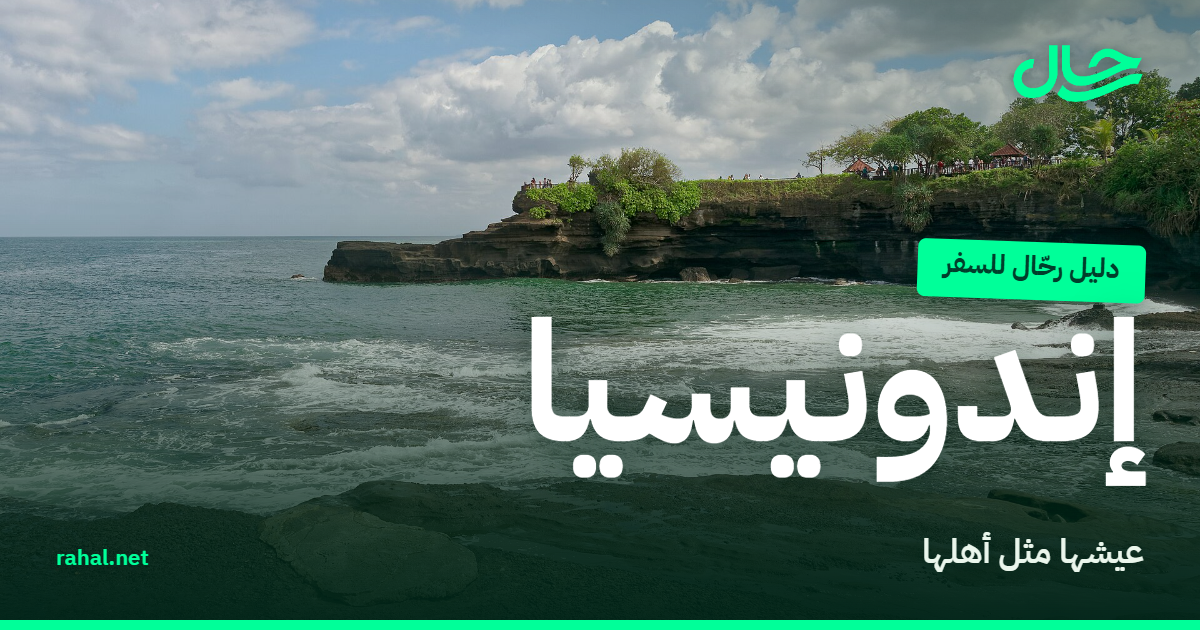
Indonesia Like a Local: The Real Travel Guide for Iraqis
For most people, Indonesia means one word: Bali. The island of temples, rice fields, beaches, and resorts that's become the ultimate honeymoon dream. But Indonesia is far bigger than Bali: it's the world's largest Muslim-majority country by population, the largest archipelago on Earth (17,000 islands), and Jakarta is a massive capital that never sleeps. If you want to experience Indonesia like a local, you'll discover one of the kindest peoples on Earth, always smiling, with cheap and delicious food, and a culture that's a fascinating blend of Islam and local tradition. In this guide from the Travel Like a Local series, let's walk through the real Indonesia, from Bali to Jakarta.
Who lives there?
Indonesia is the fourth most populous country in the world: over 280 million people spread across thousands of islands. It's the largest Muslim-majority country on Earth, so the call to prayer and mosques are everywhere, especially in Java and Sumatra. But Bali is a beautiful exception: most of its people are Hindu, which gives it its distinctive temples, rituals, and atmosphere.
The official language is Indonesian (Bahasa Indonesia), relatively easy to pick up, and English is widespread in the tourism sector in Bali and Jakarta. Arabic is limited, but Indonesians have a genuine love and welcome for Arabs and Muslims.
Indonesians are globally known for their kindness, ever-present smile, and calm demeanor. They're a peaceful, hospitable people, and raising your voice or showing anger is completely rejected in their culture.
How much does daily life cost?
Indonesia is one of the cheapest major destinations for visitors. The currency is the Indonesian rupiah (the numbers look huge — thousands and millions — don't be alarmed). According to Numbeo and other mid-2026 sources:
- Monthly expenses for one person excluding rent: roughly $450–550.
- A meal at a local restaurant (warung): $2–4.
- A room or small villa rental in Bali: starting from $300–500/month in local areas, rising significantly in upscale tourist zones.
- Transport and motorbikes are very cheap, and delivery apps are inexpensive.
For comparison: Bali in particular has become a magnet for digital nomads and remote workers worldwide because living there is comfortable and cheap. A mid-budget Iraqi traveler can live there very comfortably.
Cheap: food, massages, transport, and tropical fruit. Relatively expensive: luxury resorts and imported goods.
How do locals get around?
The two dominant apps in Indonesia are Grab and Gojek (the latter originally Indonesian): taxis, motorbike taxis (cheaper and faster in traffic), and food delivery, all at low prices. This is the backbone of transport for both visitors and locals.
In Bali, most people get around by motorbike (scooter), and rentals are very cheap — but require caution and experience, since traffic can be chaotic. Jakarta has heavy congestion, though a modern metro (MRT) has started to ease the situation.
Between islands, domestic flights are cheap (Jakarta to Bali takes about 2 hours), and ferries connect nearby islands. Distances in Indonesia are enormous (a country the size of a continent), so plan your trip around one or two islands, not the whole country.
What do they eat… and when?
Indonesian food is cheap, delicious, and varied. The two national dishes are nasi goreng (fried rice with egg, chicken, and vegetables) and mie goreng (fried noodles) — found everywhere, any time of day. Also try satay (grilled skewers with peanut sauce), rendang (meat slow-cooked in coconut milk and spices, considered one of the world's most delicious dishes), and gado-gado (vegetable salad with peanut sauce).
Popular local restaurants are called warungs — cheap and delicious, where you pick from trays of food. Indonesian coffee is world-famous. Street food is rich and cheap, just choose with a bit of caution.
A myth worth busting: Indonesian food isn't all spicy, but Indonesians love "sambal" (spicy chili sauce) with everything, so ask for it on the side if you can't handle heat.
The unwritten rules
- The right hand for everything: eating, greeting, giving and receiving. The left hand is considered improper, much like in our own culture.
- Smiling and calm are the core of the culture. Indonesians dislike raised voices, anger, and confrontation. Calm and a smile resolve almost any situation, while losing your temper instantly loses you the moment.
- Don't touch someone's head, especially children's — it's considered sacred in their culture.
- Modest dress is mandatory at Balinese temples: they'll provide you with a "sarong" (wrap) at the entrance.
- In Muslim areas (Java and elsewhere), modesty and respect are appreciated, especially during Ramadan and around mosques.
- Remove your shoes before entering homes, mosques, and some shops.
Where do locals live?
In Bali, accommodation options for visitors are wide-ranging, from cheap rooms in local areas to private villas with pools. Areas like Canggu, Seminyak, and Ubud are the most popular among visitors and remote workers, each with its own character (Canggu is trendy and youthful, Ubud is cultural and surrounded by nature, Seminyak is upscale). Search tourism platforms and rental groups.
For first-time visitors to Bali: choose your area based on your mood (beach, nature, or nightlife), and note that Bali is large — moving between areas takes time due to traffic. Jakarta is a business city of skyscrapers, and most tourists pass through it in transit to Bali.
🎵 Hear the country before you arrive
Music is half of any trip. Here's a playlist to set your mood for Indonesia before you even land — play it while you pack:
For the Iraqi traveler 🇮🇶
Visa (verified: June 2026): Indonesia offers Iraqi passport holders an electronic visa (e-Visa) or an electronic visa-on-arrival (e-VOA): apply online through the official immigration website before your trip, or obtain it on arrival at Bali/Jakarta airport (for eligible nationalities — confirm whether Iraq qualifies at the time of your trip), valid for 30 days and extendable. You'll need a passport valid for six months, a hotel booking, and a return ticket. Confirm the latest details on the official immigration website before booking, as rules change.
Flights: There's no direct flight from Iraq. Typical transit routes go through Dubai, Doha, Istanbul, or Kuala Lumpur, with total travel time to Bali or Jakarta around 11–14 hours including transit.
Money: International cards work in malls, hotels, larger restaurants, and on Grab, but the world of warungs, markets, and motorbike rentals runs on cash in rupiah. Withdraw from ATMs or exchange dollars at official currency exchange offices (avoid unofficial ones — scams are common). The numbers are large, so count carefully.
Internet: Activate the free eSIM from Rahal that comes with any confirmed international booking (1GB for 3 days): request it on WhatsApp at least 5 days before your trip, so you land in Bali already connected, then get a cheap local SIM if you're staying longer.
Halal food: Indonesia is the world's largest Muslim-majority country, so halal food is the default in Java, Jakarta, and most of the country. In Bali (Hindu-majority), halal is available but not the default, so look for restaurants with a halal sign or Muslim and Arab restaurants (found in tourist areas). Ask and confirm, and note that pork is common in Balinese cuisine.
Worth remembering: Don't try to see all of Indonesia in one trip. The country is the size of a continent with 17,000 islands. Pick Bali alone, or Bali plus a nearby island like Lombok or the Gili Islands. Season matters too: May to September is dry and ideal, while October to April is rainy season. Plan around the dry season.
The honest take
The hard parts about Indonesia: the long distance and transit time from Iraq, the traffic congestion in Bali and Jakarta that's become a real problem, and the rainy season. And what gets overlooked? Everything outside Bali: the Gili Islands and Lombok with their pristine beaches, Yogyakarta with Borobudur Temple (the largest Buddhist temple in the world), the stunning mountains and volcanoes of Java, and the rainforests of Sumatra with their orangutans. If you're also drawn to an easier-visa Muslim-majority Asian destination (visa-free for Iraqis), check out our guide on Malaysia from the same series.
Bottom line: Indonesia suits honeymooners, nature lovers, and anyone seeking a cheap tropical paradise. If you can handle the long journey and sort out your visa and season, Bali and its sister islands offer the trip of a lifetime at half the price of any Western destination.
FAQ
What's daily life like in Indonesia?A smiling, calm, tropical life: eating at warungs, getting around by motorbike and Grab, and a pleasantly slow pace, especially in Bali. Indonesians are among the kindest people on Earth and dislike raised voices and anger. Jakarta is a busy business city, while Bali has a distinct spirit with its temples, nature, and spiritual atmosphere.
Is Indonesia expensive to live in?One of the cheapest major destinations: a local meal costs $2–4, accommodation in Bali starts from $300–500/month, and monthly expenses excluding rent run about $450–550 (mid-2026 figures). Bali has become a magnet for remote workers because living there is comfortable and cheap, and an Iraqi traveler can live there very comfortably.
What important customs should I know in Indonesia?Use the right hand for eating and greeting, and smiling and calm are central to the culture (losing your temper costs you the moment). Don't touch someone's head, especially a child's. Modest dress is mandatory at Balinese temples (they provide a sarong), and modesty and respect are appreciated in Muslim areas.
What do Indonesians eat every day?Nasi goreng (fried rice) and mie goreng (fried noodles) are the two national dishes found everywhere, along with satay (skewers with peanut sauce), rendang (meat in coconut milk), and gado-gado. Popular local restaurants are called warungs — cheap and delicious — and sambal (spicy sauce) comes with everything.
Does Indonesia require a visa for Iraqis?Yes, an electronic visa (e-Visa) or electronic visa-on-arrival (e-VOA) valid for 30 days and extendable (verified: June 2026). Apply online through the official immigration website before travel, or on arrival for eligible nationalities. You'll need a passport valid for six months, a hotel booking, and a return ticket — confirm the latest details on the official website before booking.
What do tourists usually miss in Indonesia?Everything outside Bali. The Gili Islands and Lombok with pristine beaches, Yogyakarta with Borobudur Temple (the largest Buddhist temple in the world), Java's stunning volcanoes, and Sumatra's rainforests with orangutans. Indonesia is the size of a continent, and Bali is just the front door.
Sources: Wikivoyage (CC BY-SA), CIA World Factbook (public domain), cost figures from Numbeo and various sources. Last updated: June 2026.