
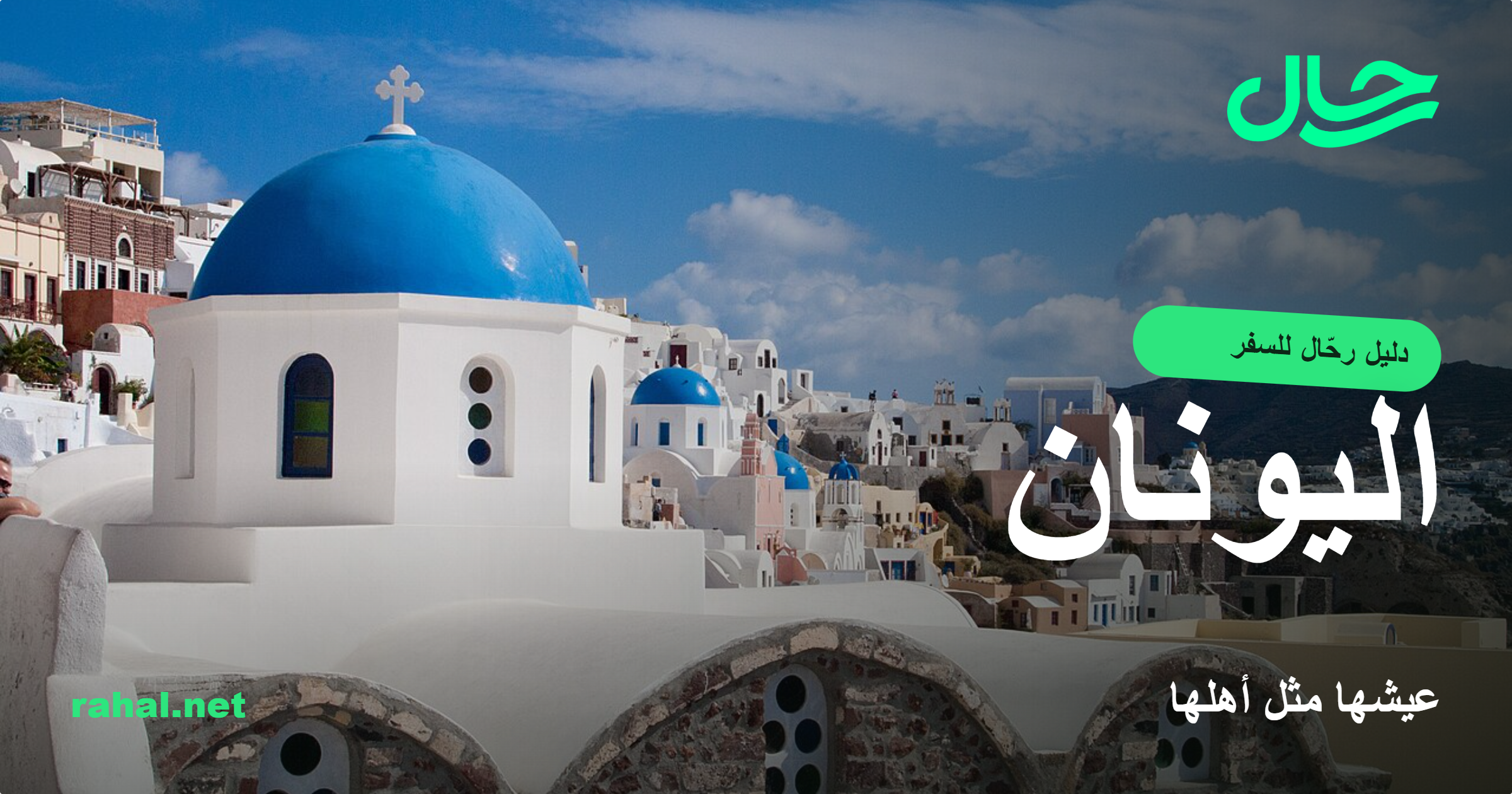
Greece Like a Local: The Real Travel Guide for Iraqis
A tourist visits Athens, photographs the Acropolis, buys a Parthenon-logo pendant, and heads home. Real Athenians sit at their neighborhood café from 5 pm until after sunset sipping a cold frappé (iced coffee, arguably the most important Greek invention after philosophy), buy their vegetables from the daily laiki agora (the local farmers' market), and know that the best island isn't touristy Santorini — it's the small island nobody knows the name of. This article isn't about landmarks. It's about a way of life.
Who lives there?
Greece has around 10.4 million people, with a median age of nearly 46 — one of the most aged societies in Europe. Over 80% of the population lives in cities, and Greater Athens alone is home to more than 3 million people, meaning a third of the country's population lives in a single city. Greek is the official language and dominant, and English is widely spoken in cities and tourist areas due to the massive tourism industry.
Religion: Greek society is overwhelmingly Orthodox Christian (over 90%), and the Church is a core part of national identity and the yearly calendar — religious holidays shape the rhythm of the entire year. Here's a fact that surprises many: Greece is one of the most tourism-dependent countries in Europe as a primary income source (about a sixth of the population works seasonally in the sector), which creates two different Athens: a summer Athens crowded with tourists, and a quiet winter Athens that belongs to locals.
The daily rhythm is completely different from Northern Europe: lunch is late (2–4 pm), the siesta genuinely exists, especially on islands and in small towns, and dinner starts from 9 pm and can run past midnight. Social life really begins after sunset.
How much does daily life cost?
Athens residents earn an average of around €1,000 net per month, low compared to the European cost of living, creating real pressure on locals, especially with recently rising rents. A meal at a budget restaurant costs about €13, while a simple takeaway meal (souvlaki, a Greek-style wrap) costs only €4–6.
Rent has become the biggest burden in recent years: a one-bedroom apartment in central Athens ranges from €800–1,400 per month (sharply risen due to Airbnb and foreign investment), dropping to €400–700 outside the center. A monthly transit pass costs about €23, among the cheapest in Europe.
Surprisingly cheap: seasonal fruit and vegetables at the daily local market (laiki agora), olive oil and local products, and public transport. Notably expensive: rent in central Athens and the tourist islands, and utility bills (electricity and heating), especially in winter.
(Numbeo Athens 2026 figures: numbeo.com/cost-of-living/in/Athens)
How do locals get around?
Athens residents rely on a modern, clean metro network (3 main lines), plus trams and city buses. A single ticket works across all transit modes (metro, tram, bus) for 90 minutes — a very practical system.
For the islands, the ferry is the essential, quintessentially Greek mode of transport. Ferries depart from the port of Piraeus (near Athens) to hundreds of islands. Islanders themselves use ferries for daily travel between nearby islands, and tourists pay roughly the same fare.
A car is genuinely useful on larger islands (Crete, Rhodes) and rural areas, but in Athens itself it's a real burden due to traffic and scarce parking. Yellow taxis are common and relatively cheap — use the Beat app (the Greek equivalent of Uber) to avoid any route-padding attempts.
What confuses outsiders: ferry schedules change seasonally and are affected by weather (strong winds can cancel entire routes without warning) — plan inter-island trips with flexibility, and don't book back-to-back connections with a tight time gap.
What do they eat, and when?
Greek breakfast is very light: coffee (frappé or Greek coffee, brewed Turkish-style), and sometimes a koulouri (sesame bread ring) from a street vendor. Lunch is late, starting from 2 pm, and dinner is even later, starting from 9 pm and often stretching to midnight, especially in summer.
Dishes you must try: souvlaki (grilled meat skewers with pita bread and tzatziki sauce, the most famous street food), moussaka (layers of eggplant, ground meat, and béchamel), and Greek village salad grilled vegetables and olive oil (horiatiki salata, or "farmer's salad," with tomato, cucumber, olives, and feta cheese). Real feta cheese is completely different from the packaged version — try it fresh from a local cheese shop.
A myth worth busting: Greek food is just gyros (the doner). This is simple tourist food — real Greek cuisine runs much deeper, built around mezes (small shared plates), seasonal vegetables, and premium olive oil.
Worth remembering: Order a "frappé" instead of regular coffee if you want an authentic local experience — it's a Greek invention, and locals drink it all day regardless of temperature, even in winter.
The unwritten rules
Greetings in Greece are warm: a handshake, and among friends, a kiss on each cheek. Talking loudly with lots of hand gestures is completely normal — not a sign of anger or conflict, just the typical Greek style of expression.
Everyday dress: Greeks dress with casual elegance — summer means light clothing, but when visiting churches and monasteries (especially at Meteora or Mount Athos), modest dress is required — covering shoulders and knees is a strict condition, and you may be denied entry without it.
Home hospitality: if you're invited to a Greek home, expect very generous hospitality — your plate will never stay empty. Bring something sweet, and expect a long sitting at the table. Being 15–20 minutes late is normal and expected at nearly every social occasion.
Off-limits topics: the historical relationship with Turkey is very sensitive (Cyprus, territorial disputes) — avoid any comparison or political discussion on this. The economic crisis Greece went through is a sensitive topic for some people. What they take pride in: history, philosophy, and hospitality (philoxenia, a Greek word that literally means "love of the stranger").
You'll come across as rude if you: rush a meal or ask for the bill quickly (dinner is a long social experience, not a quick meal), or flatly and repeatedly refuse offered hospitality.
Where do locals live?
Athens residents live in neighborhoods completely different from the tourist areas: Pangrati and Koukaki (close to the center but residential in character), Kifisia (upper-middle-class, north Athens), and Nea Smyrni (a quiet family neighborhood). The tourist center around the Acropolis and Plaka has become filled with hotels and Airbnbs, pushing original local residents further out.
For renting, they use Spitogatos and XE.gr (Greece's most popular classifieds sites). The real problem right now: a genuine housing crisis caused by Airbnb converting many residential apartments into short-term tourist rentals, which has noticeably driven up rents in recent years.
As a visitor, staying in neighborhoods like Pangrati or Koukaki offers an experience closer to real local life while staying close to the landmarks, and cheaper than staying directly in touristy Plaka.
🎵 Hear Greece before you arrive
Everyday Greek music centers on rebetiko (old folk music, originating from Asia Minor refugees in the early 20th century, often compared to Greek blues for its depth and sorrow), laiki (modern popular music heard at every wedding and celebration), and bouzouki music (a distinctive Greek stringed instrument). In summer, modern Greek pop songs dominate every island and beach.
For the Iraqi traveler 🇮🇶
Visa: Iraqi passport holders need a mandatory Schengen visa to enter, exactly like every other Schengen country. You can apply at the Greek Consulate in Baghdad or an accredited visa center. Standard requirements: a passport valid for at least 3 months beyond your visa's expiry, confirmed bookings, travel insurance, a bank statement proving financial means, and a clear travel plan. The standard application fee is €80. Processing takes 15–30 days — apply early. Confirm current requirements on the official Greek Consulate website or the VFS center. (Verified: June 2026)
Flights: There are currently no direct flights from Iraq to Greece. Best options: Turkish Airlines via Istanbul (most commonly used by Iraqis, a relatively short journey), Emirates via Dubai, and Gulf Air via Bahrain.
Cash and cards: Athens and major cities accept Visa and Mastercard easily at most shops and restaurants. Small islands and local shops may prefer cash — bring enough euros with you, especially if heading to remote islands. A Wise card is an excellent option for transfers without high fees.
Halal food: Greece isn't a strong destination for halal food compared to other European countries, but Athens has Turkish and Arab restaurants in certain areas (especially near Omonoia) offering halal options. Fish, vegetables, and vegetarian mezes are a safe and widely available option. The Zabihah app helps you find the nearest halal restaurant in Athens.
Community: The Iraqi community in Greece is relatively small compared to other European countries, but Athens has a diverse Arab community. Facebook groups like "Iraqis in Greece" are limited but useful for practical information.
Related article: Turkey Like a Local
The honest take
Greece is wonderful for anyone who loves history, the sea, and a slow rhythm of life, and Iraqi travelers usually love it for the human warmth and hospitality that feels similar to our own. What's genuinely hard: the housing and rent crisis currently affecting Athens due to overtourism, which makes traveling in peak summer (July and August) crowded and very expensive, especially on famous islands like Santorini and Mykonos.
What gets overlooked: Nafplio and the Peloponnese in general. Tourists focus on the famous islands, but the Peloponnese peninsula holds genuinely ancient Greek history (Sparta, Olympia) without the mass-tourism crowds, and at a much lower cost. Who it suits: the Iraqi traveler who loves combining history, the sea, and a slow pace of life, and who can handle summer crowds in exchange for the view. Not for someone seeking a perfectly organized trip with no ferry-schedule surprises.
Bottom line: Greece teaches you that slowness isn't laziness — it's a genuine art of living its people inherited over thousands of years, and you need to let go of a rigid schedule to truly enjoy it.
FAQ
Does an Iraqi passport need a visa for Greece?Yes, Iraqi passport holders need a mandatory Schengen visa to enter Greece and any Schengen country. Apply at the Greek Consulate in Baghdad or an accredited visa center; the standard application fee is €80. Apply at least a month before your trip to avoid appointment delays.
How much does a trip to Greece cost for an Iraqi traveler?A budget traveler needs roughly €50–70 daily (hostel or Airbnb in a residential neighborhood, souvlaki and local mezes, public transport). A traveler staying at a mid-range hotel and eating at restaurants needs €100–150 daily. Flight tickets range from $500–800 round-trip via a connecting hub, and inter-island ferry costs add up if you plan to visit more than one island.
Is halal food available in Greece?Relatively limited compared to other European countries, but Athens has Turkish and Arab restaurants offering halal options, especially near the Omonoia area. Fish, vegetables, and Greek vegetarian mezes are widely available and always a safe choice. The Zabihah app helps you find the nearest halal restaurant.
Is English enough to get by in Greece?Yes, quite sufficient, especially in Athens, tourist islands, hotels, and restaurants. Tourism is a core part of the economy, so most Greeks who deal with visitors speak good English. In small villages and rural areas, English is less common, but gesture-based help is always available.
What's the best time to visit Greece from Iraq?Two ideal windows: May and June (ideal swimming weather, less crowded than peak summer, reasonable prices) and September and October (after the summer peak, the sea is still warm, calmer atmosphere). Avoid July and August if you dislike heavy crowds and doubled prices, especially on famous islands.
Do I need to visit more than one island?Not necessary, but if you have enough time (10 days or more), combining two or three islands makes for a richer experience. Plan your schedule with flexibility since ferries are weather-dependent and can be delayed or canceled, especially during strong-wind months (July and August, the well-known Meltemi winds).
Sources: Wikivoyage (CC BY-SA), CIA World Factbook (public domain), cost figures from Numbeo Athens, the Greek Consulate in Baghdad for visa information. Last updated: June 2026.