
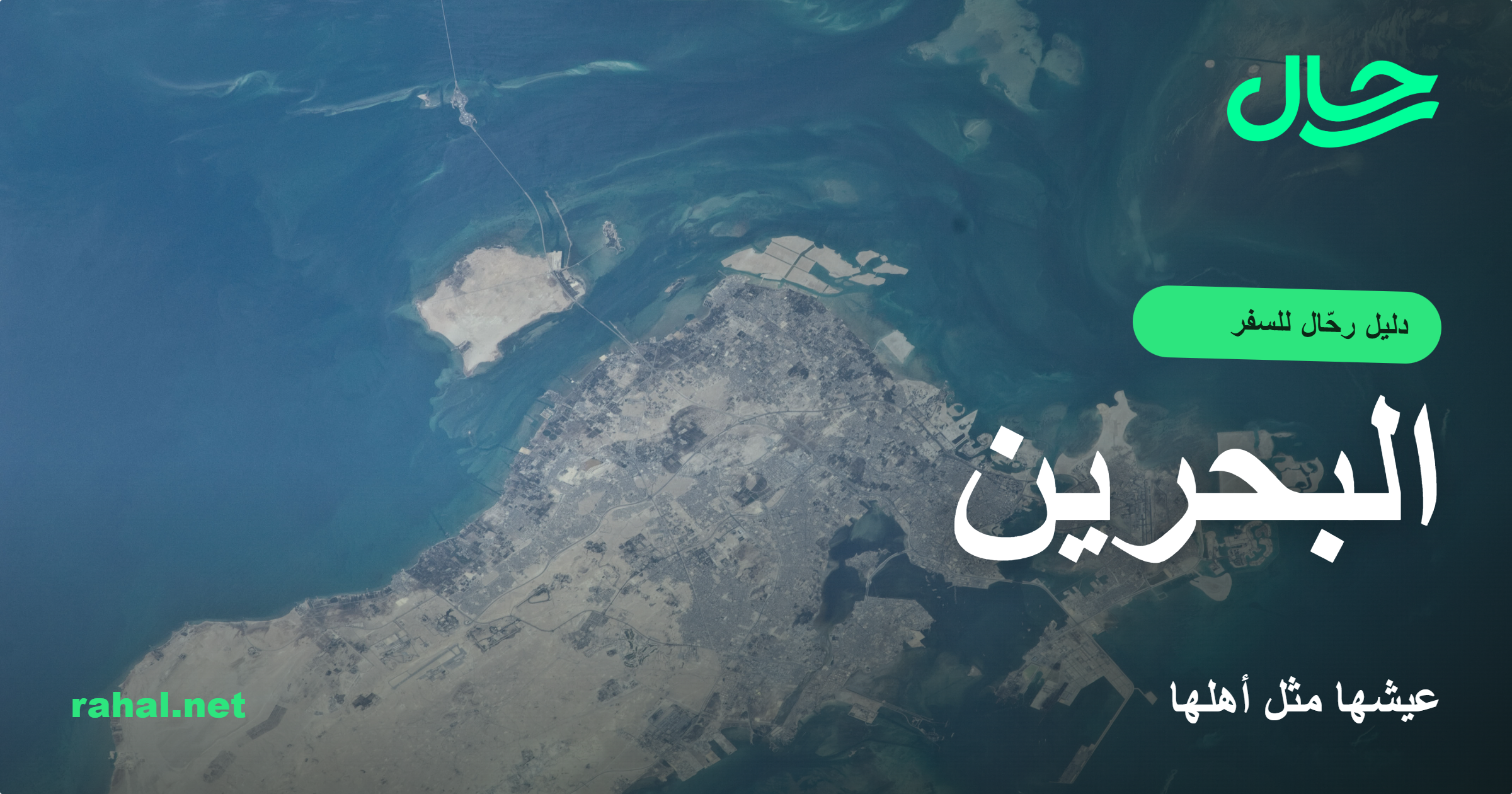
Bahrain Like a Local: The Real Travel Guide for Iraqis
The mistake every tourist visiting Bahrain makes is photographing Bahrain Fort, buying dates and maamoul, and heading home the same day. Locals live Bahrain in a completely different way: they sit in their majlis until midnight with endless Arabic coffee, head to the Corniche right after sunset prayer, and know the best grilled hammour in the world isn't at a five-star hotel restaurant — it's at a forgotten little restaurant next to Muharraq's port. This article isn't a list of landmarks. It's a guide to living.
Who lives there?
Bahrain is a small island covering 786 square kilometers, home to around 1.6 million people, about 50% citizens and 50% expats. This balance makes Bahrain one of the highest countries in the world by expat-to-population ratio. Native Bahrainis are concentrated in the north, Manama, and Muharraq, while newer cities like Hamad Town and Isa Town have a diverse mix.
The social makeup is unique: Islam is the official religion and the majority is Muslim, with a Bahraini society split between Sunni and Shia, alongside Indian, Pakistani, Filipino, and Arab communities. This mix has created a distinct Bahraini character: open and friendly, yet firmly rooted in its heritage.
The daily rhythm: government work starts early, between 7 and 8 am, and the weekend is Friday-Saturday (changed from Thursday-Friday in 2006 to align with the rest of the world). Social life really starts after sunset prayer and stretches late into the night. Bahrain is one of the most socially open countries in the Gulf, with a calmer, more family-oriented pace of life compared to Dubai or Doha.
How much does daily life cost?
Bahrain is one of the cheapest Gulf countries to live in, noticeably cheaper than the UAE and Qatar. The average monthly salary for an employee ranges from BHD 600–1,200 ($1,600–3,200), and there's no income tax.
Rent is the biggest expense: a one-bedroom apartment in central Manama ranges from BHD 250–400/month, dropping to BHD 150–250 in areas like Sitra, Muharraq, and Diraz outside the center. A meal at a casual Bahraini restaurant costs about BHD 2–4, and at a mid-range restaurant BHD 6–12.
Surprisingly cheap: gasoline (government-subsidized), fresh fish from the local market, and vegetables and fruit at local markets. Home internet is good at BHD 15–25/month. Relatively expensive: fancy hotel restaurants, and housing in upscale areas like Juffair and Seef.
(Numbeo Manama 2026 figures: numbeo.com/cost-of-living/in/Manama)
How do locals get around?
Bahrain is very much a car country. The road network is excellent, fuel is cheap, and most locals own a car. Distances are short — the entire island takes no more than an hour by car end to end.
Public transport exists (buses) but is limited and doesn't cover every area. A bus ticket is very cheap, starting from BHD 0.3, but real locals rarely use it. Taxi apps like Careem and Uber are widespread and convenient for visitors, with a trip within Manama costing BHD 2–4.
A unique feature: the King Fahd Causeway connects Bahrain to Saudi Arabia (25 km), and millions of Saudis cross it for leisure and shopping, especially on weekends. Thursday and Friday evenings, the causeway gets unbelievably congested — keep this in mind if you're planning to travel then.
For visitors: rent a car if you want to explore Bahrain freely. Rental prices are reasonable, BHD 15–30/day. Parking is available and often free outside Manama.
What surprises outsiders: traffic congestion in Bahrain is real, especially during rush hour (7–9 am and 4–7 pm). A small island with a large number of cars means real congestion on the causeways and main Manama streets.
What do they eat, and when?
Bahraini cuisine is influenced by the sea, the Gulf, and India together. Fish and seafood are central to daily life, and Indian spices dominate most traditional Bahraini dishes.
Bahraini breakfast at home: thin bread or Bahraini kaak with ghee and honey or eggs, and Arabic coffee or cardamom tea. In local markets, breakfast means red eggs, tandoor bread, and ful medames.
Lunch is the main meal, from 12–3 pm. Casual restaurants open from morning, while hotel and upscale restaurants run from noon to 11 pm. Dinner at home is light, but going out to restaurants at night is a well-established social culture, especially during Ramadan.
Dishes you must try:
- Machboos: the national dish, spiced rice topped with meat, chicken, or fish, served with daqoos sauce (tomato, lemon, and cardamom). It tastes distinctly different from any other Gulf kabsa
- Grilled hammour: warm Gulf-water fish, grilled with simple spices and served with rice. Best found at small stall-style restaurants near the port
- Jasheed: crushed wheat slow-cooked with fish or chicken, a heavy, delicious heritage dish nearly forgotten by younger generations
- Khabees: a traditional sweet made from flour toasted in ghee with dates and saffron, tasting similar to Omani halwa but with a Bahraini character
- Bahraini samosa: different from Indian samosa, with thinner pastry and a spicier filling
- Bahraini cardamom-saffron coffee: served in a dallah (copper coffee pot) with dates — not a tourist tradition, but a daily ritual at every home and majlis
A myth worth busting: that all Gulf food is the same. Bahraini cuisine is more influenced by India, Iran, and the Zanj heritage than other Gulf countries, making it spicier, more complex, and more varied than expected.
Worth remembering: the Manama Central Market in the morning. Fishermen sell fresh fish from dawn. Real Manama residents show up at 6 am to get today's fish. Fish after 9 am simply doesn't taste the same.
The unwritten rules
Bahrainis are naturally warm and generous. Hospitality isn't a formality — it's a genuine value. If you're invited to a Bahraini home, the invitation is sincere, and refusing three times is considered a final decline. The rule: accept the first two times and decline the third if you genuinely don't want to.
The majlis is a culture unto itself. Nearly every respected family has a majlis (a large separate reception room) open to visitors. Sitting in a majlis means endless coffee and continuous dates. Shake the cup left and right if you don't want more coffee, otherwise it'll be refilled.
Dress: Bahrain is more flexible than its neighbors. Tourists aren't required to wear an abaya in public places, but modest dress is respected in local markets, mosques, and residential areas. Malls and restaurants accept any respectful clothing.
Sensitive topics: sectarian tension is a topic completely avoided in general gatherings. Bahrainis themselves may avoid discussing it with strangers. Domestic politics is also a topic you shouldn't initiate. What they take pride in: their pearl-diving heritage (UNESCO-listed), the Formula 1 race, and being the first Gulf country to extract oil.
You'll come across as rude if you:
- Point at someone or call out loudly across a crowd
- Ask about the women in someone's family at a first meeting (asking about family and brothers generally, not women specifically, is fine)
- Park in a way that blocks a road or entrance — respecting pathways is taken seriously
Where do locals live?
The average Bahraini lives in an apartment or villa in areas far from the touristy Manama center. Popular residential areas: Muharraq (the oldest, most authentic city), Budaiya and Qadam (quiet family neighborhoods), Riffa and Isa Town (modern, expanding areas), Sitra and Hidd (cheaper options for expats).
Manama is the center for offices, hotels, and upscale restaurants, but real life is found in the old Muharraq neighborhoods and the narrow alleys between traditional Bahraini houses.
For residents and expats: the best value rental areas are Sitra, Muharraq, and Diraz, at 30–40% less than Manama with short driving distances. For renting, use Property Finder Bahrain or Seef Real Estate or expat Facebook groups. For a short stay, Booking.com and Airbnb offer reasonable options.
🎵 Hear Bahrain before you arrive
Bahraini music isn't just typical Gulf songs. Bahrain has a distinct sound: influenced by old Gulf rhythms, African Zanj drums, and Persian melodies, all blended with the sea, diving, and pearls to create something unlike anywhere else.
For the Iraqi traveler 🇮🇶
Visa: Iraqi passport holders need a visa to enter Bahrain. Good news: Bahrain is one of the easiest Gulf countries for Iraqis to get a visa for. You can apply electronically through the official Bahraini government portal or through VFS centers. The tourist visa typically costs BHD 25 and is issued quickly. Always confirm on the official Bahraini Ministry of Foreign Affairs website, as conditions change. (Verified: June 2026)
Flights: Gulf Air is the Bahraini national carrier and connects Erbil and Baghdad to Manama directly at certain times. FlyDubai and Air Arabia connect with a short transit through Dubai or Sharjah. Flight prices between Iraq and Bahrain are relatively reasonable compared to Europe.
Cash and cards: Bank cards are accepted at restaurants and large shops. Cash is needed at local markets and small restaurants. The Bahraini dinar is one of the highest-valued currencies in the world (1 dinar ≈ $2.65) — keep this in mind when exchanging. Banks and exchange offices are available everywhere.
Halal food: Bahrain is a Muslim country, so food is halal by default in public places.
Iraqi community: Present notably, especially in Manama and Muharraq. Facebook groups like "Iraqis in Bahrain" have useful, up-to-date practical information. Arab visitors in general are warmly welcomed.
The honest take
Bahrain is excellent for anyone who wants a Gulf experience with a calmer, more authentic, family-oriented flavor than Dubai. The pace is slower, people are warmer, and prices are more reasonable. Iraqi travelers usually feel a clear cultural closeness here, not because it resembles Iraq exactly, but because the majlis culture, the coffee, the fish, and the way people sit together at night feel familiar.
What's genuinely hard: the housing crunch isn't as severe as in the UAE, but finding a suitable apartment at a reasonable price takes time and searching. Summer heat is intense (exceeding 40°C with high humidity in June and August).
What gets overlooked: old Muharraq Island. Before Manama existed, Muharraq was Bahrain. Its stone heritage houses, narrow alleys, and stories of pearl divers feel far more authentic than any luxury hotel. Walk through it in the morning with no plan.
Who it suits: the Iraqi traveler who wants to relax in a warm Gulf atmosphere without the pressure of massive cities, try genuine seafood cuisine, and experience majlis nights with people who feel similar in spirit.
Bottom line: Bahrain teaches you that small size doesn't mean small value, and that generosity doesn't need a lot of space.
FAQ
Does an Iraqi passport need a visa to enter Bahrain?Yes, Iraqi passport holders need a visa. But Bahrain is one of the easiest Gulf countries for Iraqis to get one, often with electronic application available. Check the official Bahraini Ministry of Foreign Affairs website or the Bahraini Embassy in Baghdad two weeks before travel.
How much does a trip to Bahrain cost for an Iraqi traveler?A budget traveler needs roughly BHD 30–50 daily (basic hotel or apartment, casual food, taxi transport). At a mid-range hotel with good restaurants, you'll need BHD 70–120 daily. Round-trip flight tickets from Baghdad or Erbil to Manama range from $200–500 depending on season and carrier.
Is the social atmosphere comfortable for Arab travelers?Very much so. Bahrain is one of the most welcoming and open Gulf countries. Arabic is sufficient everywhere, and Bahrainis are known for their generosity and warmth toward Arab guests especially.
What's the best time to visit Bahrain?November through March is the golden season: excellent weather, 18–26°C, tourism and events at their peak. Avoid June through September if you're not used to intense heat with high humidity. Ramadan is a completely different experience: the city comes alive at night, and local restaurants are packed with a beautiful atmosphere.
Do I need a car in Bahrain?For a short visit, Careem and Uber are enough. But if you want to explore Bahrain fully — villages, heritage sites, and beaches — renting a car for BHD 15–25/day is best. Roads are excellent and easy to navigate with a map.
Can I cross into Saudi Arabia from Bahrain?Yes, via the King Fahd Causeway, but you need a separate Saudi visa. For Iraqis, obtaining a Saudi visa has its own specific requirements.
Sources: Wikivoyage (CC BY-SA), CIA World Factbook (public domain), cost figures from Numbeo Manama 2026, visa information from the Bahraini Ministry of Foreign Affairs. Last updated: June 2026.